
Quick Summary
On October 8, 1993, beloved American television star Ted Danson appeared at the Friar’s Club Celebrity Roast in New York City in full blackface makeup — face painted black, lips exaggerated in the style of 19th-century minstrel performers — and delivered a racially charged 20-minute comedy set that included repeated use of the N-word and graphic jokes about interracial sex.
The performance was co-written with his then-girlfriend Whoopi Goldberg, who publicly defended it as collaborative satire. Despite that defense, the incident triggered nationwide outrage, condemnation from civil rights leaders including Al Sharpton and the NAACP, and became one of the most debated US blackface controversies in modern entertainment history.
Danson issued a public apology, his relationship with Goldberg ended, and his public image suffered — yet his career ultimately recovered. He remains a working, respected actor in 2026, raising enduring questions about accountability, comedy, race, and who gets a second chance in American entertainment.
Quick Bio: Ted Danson
| Field | Details |
|---|---|
| Full name | Edward Bridge Danson III |
| Born | December 29, 1947 — San Diego, California |
| Known for | Sam Malone in Cheers (1982–1993) |
| Other major roles | Becker, CSI, The Good Place, Yellowstone universe |
| Awards | 2× Primetime Emmy, multiple Golden Globes |
| Controversy date | October 8, 1993 |
| Event | Friar’s Club Celebrity Roast, New York City |
| Co-wrote with | Whoopi Goldberg (then-girlfriend) |
| Apology issued | Yes — shortly after the backlash |
| Career status (2026) | Active, respected, working in Hollywood |
Who Is Ted Danson?
Ted Danson is one of the most enduring names in American television. Born Edward Bridge Danson III on December 29, 1947, in San Diego, California, he became a household name through his portrayal of Sam Malone — the quick-witted, lovable bartender — on NBC’s legendary sitcom Cheers, which aired from 1982 to 1993. The show defined an era of American comedy, and Danson’s performance earned him two Primetime Emmy Awards and multiple Golden Globe wins.
His career did not stop at Cheers. Danson went on to star in Becker, appear in CSI: Crime Scene Investigation, and deliver what many critics consider his finest late-career performance as Michael, the scheming yet oddly endearing demon, in NBC’s philosophical comedy The Good Place (2016–2020). More recently, he has been part of the sprawling Yellowstone television universe. Over four decades, he has remained one of the rare constants in an industry that discards most of its stars quickly.
Yet beneath the awards, the beloved roles, and the decades of goodwill, Ted Danson’s legacy carries a complicated chapter — one rooted in a single evening in 1993 that sparked one of the most discussed US blackface controversies in modern entertainment history.
What Happened in the Ted Danson Blackface Incident?
The Ted Danson blackface performance took place on October 8, 1993, at the Friar’s Club Celebrity Roast held in New York City. The Friar’s Club has a long tradition of adult comedy roasts, events where public figures are subjected to deliberately outrageous humor. The guest of honor that evening was Whoopi Goldberg — actress, comedian, and at the time, Ted Danson’s girlfriend.
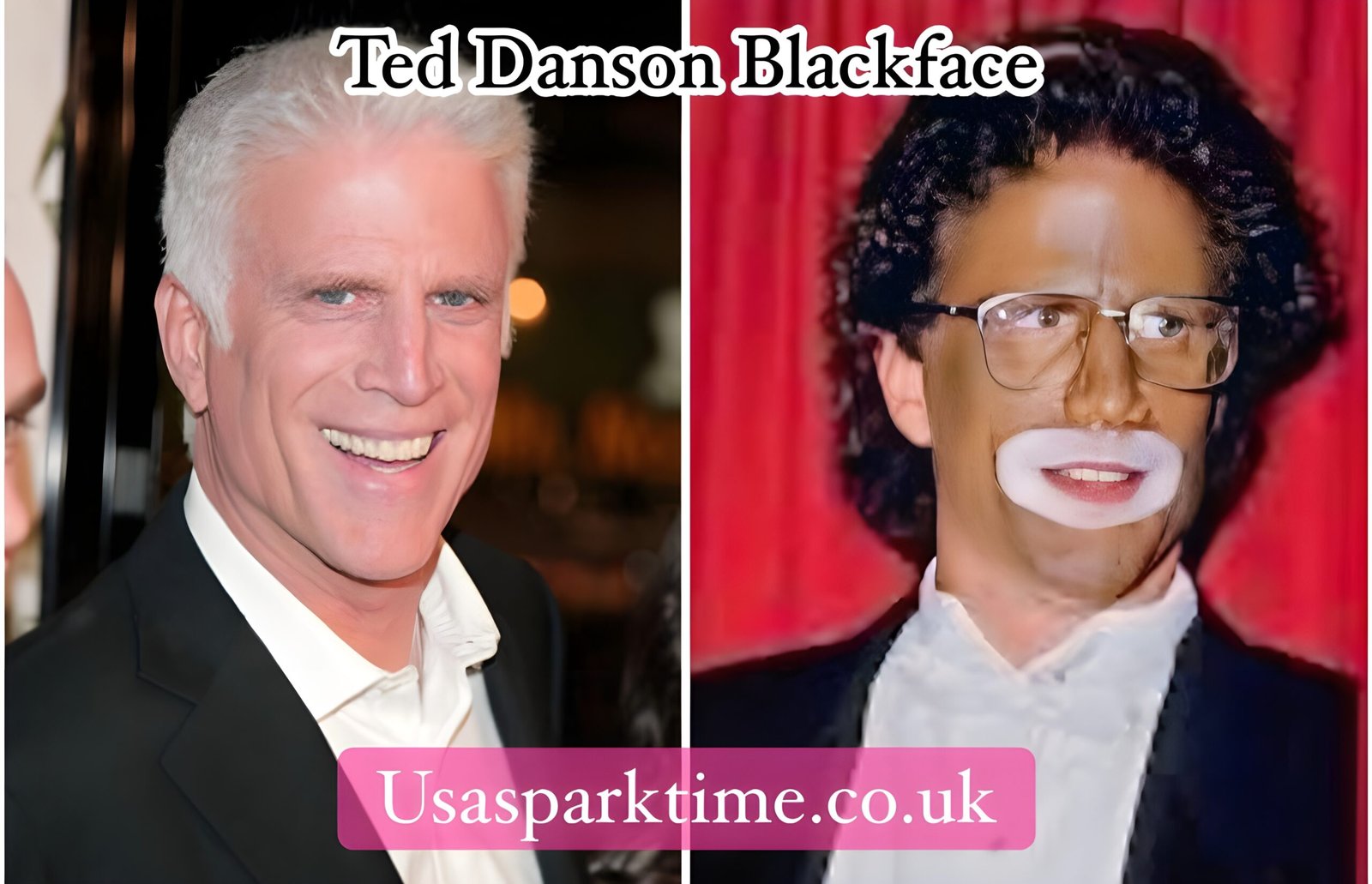
Danson took the stage in full blackface makeup. His face was painted black, his lips exaggerated with white and red paint in the style of early 20th-century minstrel performances, and he wore a tuxedo and top hat to complete the look. The set he performed ran for approximately 20 minutes. The material — which he and Whoopi Goldberg reportedly wrote together — was graphic, racially charged, and sexually explicit. He used the N-word multiple times, made crude jokes about interracial sex, and built much of the routine around racial stereotypes.
The event was not broadcast live on television, but the roughly 3,000 attendees included celebrities, journalists, and prominent New York figures. Despite the Friar’s Club’s reputation for pushing limits, the room’s reaction was reportedly divided — with audible discomfort, scattered walkouts, and confused silence from sections of the audience alongside the laughter from others.
By the following morning, word of the controversial blackface skit had spread across every major newsroom in the country. What began as a private roast became a defining public moment in American race and media history.
Why Is Blackface Considered Offensive?
To understand why the Ted Danson blackface usa controversy triggered such an intense national reaction, it is necessary to understand the history of blackface in comedy and American media — a history that is not merely uncomfortable but genuinely traumatic for millions of people.
Blackface emerged as a theatrical practice in the United States in the early 19th century. White performers would darken their faces with burnt cork or greasepaint, paint their lips in an exaggerated style, and perform caricatures of Black Americans in what became known as minstrel shows. These performances depicted Black people as lazy, ignorant, childlike, and buffoonish — flat, demeaning stereotypes performed for white audiences who consumed them as entertainment.
The history of blackface in comedy is inseparable from the history of racial oppression in America. Minstrel shows were not merely offensive jokes; they were an active mechanism of dehumanization. By consistently portraying Black Americans as less than fully human, these performances helped construct the ideological framework that white audiences used to justify segregation, voter suppression, and racial violence. The cultural impact of blackface extended far beyond the stage. Minstrel stereotypes seeped into advertising, early cinema, animated cartoons, and children’s literature — shaping American racial attitudes across generations in ways that scholars continue to document and analyze today.
By the time of the Civil Rights Movement, blackface had been broadly — though not universally — abandoned in mainstream entertainment. The practice was understood by most Americans to be a relic of the country’s most shameful traditions. Yet it never fully disappeared. It resurfaced in Halloween costumes, in isolated celebrity incidents, and in the occasional comedy sketch that tested where the line between satire and racism actually sat.
Blackface in American media occupies a unique position precisely because it carries the full weight of that history. Unlike some offensive content that might be considered distasteful or insensitive, blackface is broadly recognized — by historians, civil rights organizations, and mainstream cultural institutions — as a symbol of racial dehumanization. Its appearance in any context, regardless of the intent behind it, tends to trigger immediate and widespread condemnation because the imagery itself communicates a message that transcends any individual’s stated purpose.
This is the cultural and historical backdrop against which Ted Danson’s 1993 performance must be understood.
Public Reaction and Media Coverage
The US audience reaction to the Ted Danson blackface performance was fierce, immediate, and sustained. For a controversy that predated social media by more than a decade, it spread with remarkable speed and reached essentially every corner of American public life.
Civil Rights Response
Civil rights leaders were among the first to respond publicly. The Reverend Al Sharpton called the act deeply offensive and demanded accountability. The NAACP issued a formal condemnation. African American communities and advocacy organizations across the country expressed outrage — not just at the blackface imagery itself, but at the totality of the performance, including the repeated use of the N-word and the graphic racial content of the jokes.
New York City Mayor David Dinkins — the city’s first Black mayor, who was present at the roast — reportedly left before or during Danson’s set. His departure was widely noted in the press and read as a clear signal of how the performance was being received by Black civic leaders.
Media Coverage
The New York Times, the Los Angeles Times, and The Washington Post all ran prominent coverage of the incident. National television news broadcasts picked up the story. Entertainment trade publications dissected it. For weeks, the Ted Danson blackface controversy was one of the most actively discussed topics in American media — a remarkable fact given the absence of Twitter, Facebook, or any of the digital amplification mechanisms that drive modern outrage cycles.
Part of what made the story so electrifying was the contrast it created. Ted Danson was, in October 1993, perhaps the most beloved male television star in America. Cheers had just completed its legendary final season. The image of Sam Malone — warm, funny, universally likable — was suddenly placed side by side with the image of a white man in blackface on a public stage in New York City. The cognitive dissonance was enormous, and the press reflected that shock faithfully.
The Whoopi Goldberg Complication
The coverage was complicated significantly by the fact that Whoopi Goldberg — the Black woman being roasted — publicly and immediately defended the performance. She stated that she helped write the material with Danson, that the entire set was intended as a satirical commentary on race, American culture, and their interracial relationship, and that she personally found it funny.
Goldberg’s defense split US audience reaction in a way that the controversy might not otherwise have been split. Those inclined toward a more charitable interpretation of the performance argued that Goldberg’s co-authorship and explicit endorsement transformed it from a racist act into something more like collaborative, if extreme, satire. Those who condemned it argued — persuasively, in the view of most critics — that a Black woman’s individual approval cannot neutralize the historical and cultural weight of blackface, and that the imagery causes harm that extends far beyond any two people’s personal intentions.
Ted Danson’s Response and Apology
In the immediate days following the roast, Ted Danson’s public response was careful and somewhat measured. Initial statements acknowledged the controversy without delivering a clear, unqualified apology — a pattern that itself drew additional criticism from those who felt a more direct response was warranted.
As the scale of the national reaction became undeniable, Danson issued a more explicit Ted Danson apology. He expressed genuine regret for the hurt the performance had caused, acknowledged that the use of blackface was wrong regardless of the context or the intentions behind it, and said he took full responsibility for his decision to appear in the makeup. He did not attempt to hide behind Goldberg’s co-authorship as a complete defense, though the fact of her collaboration was noted throughout the public discussion of the incident.
The public reception of the apology was predictably mixed. Many people accepted it as sincere and noted that the incident, while deeply offensive, appeared to have emerged from a place of misguided creative collaboration rather than straightforward malice. Others felt the apology was insufficient — that no apology can fully address the harm caused by deploying centuries-old imagery of racial dehumanization as a punchline, however satirical the intent.
In the years since, Danson has been notably restrained on the subject. When interviewers have pressed him about the incident, he has consistently expressed regret without attempting to reopen the debate or relitigate the merits of the performance. He has not argued that the world has misunderstood him. His posture has been one of quiet accountability — neither defensive nor performatively self-flagellating, but simply regretful.
How the Controversy Affected Ted Danson’s Career and Blackface Association
Short-Term Fallout
The impact on Ted Danson’s career in the months immediately following the controversy was real, if not catastrophic. His romantic relationship with Whoopi Goldberg ended later in 1993 — the couple separated, with both attributing the split to the general pressures of their relationship, though the timing placed the blackface incident uncomfortably close to the breakup in the public mind.
His public image took a genuine hit. Endorsement opportunities that might have flowed naturally from his status as America’s most beloved television star became less available. The Ted Danson that the country thought it knew — the affable, safe, universally beloved Sam Malone — had been replaced, at least temporarily, by a far more complicated figure.
The Long Recovery
What is perhaps most significant about the arc of Ted Danson’s career and blackface controversy is the degree to which his career recovered. Within a few years, he was starring in Becker, a successful CBS sitcom that ran for six seasons. He continued to work steadily across both television and film. He never became persona non grata in Hollywood in the way that some celebrities have after racism-adjacent controversies.
The arrival of The Good Place in 2016 marked a kind of second cultural peak for Danson. Playing Michael — a character who begins the series as a villain and spends four seasons learning to be good — earned him enormous critical praise and introduced him to an entire generation of viewers who had little or no awareness of the 1993 incident. The irony of Ted Danson playing a character whose central journey is about moral redemption was not lost on cultural commentators.
As of 2026, Ted Danson remains a working, respected, and employed actor. His legacy in American entertainment is shaped primarily by Cheers, The Good Place, and his broader body of work. The blackface controversy is part of his story, but it is not the whole story — and the question of why some careers survive moments of racial controversy while others do not remains genuinely unresolved in American culture.
Why the Ted Danson Blackface Story Still Matters
More than thirty years after the Friar’s Club Roast, the Ted Danson blackface controversy continues to be cited, discussed, and debated in American cultural conversations. It has not faded into obscurity the way many celebrity controversies do. There are several reasons for that persistence.
Comedy, Race, and Where the Line Is
The incident sits permanently at the intersection of two ongoing American debates: what comedy is allowed to say about race, and who is allowed to say it. The history of blackface in comedy is not abstract — it is a living question that resurfaces every time a comedian pushes into racial territory, every time a sketch show includes racially charged material, and every time a public figure is photographed in offensive costume.
The Ted Danson case is particularly useful as a reference point precisely because it involves so many complicating variables: the roast format, the collaboration with a Black co-writer, the intent to satirize rather than demean, and yet the unambiguous use of imagery with a specific and devastating historical meaning. It does not resolve cleanly, which is why it keeps being revisited.
Saturday Night Live and the Broader Context
Discussions of the Ted Danson Saturday Night Live blackface connection occasionally surface in cultural commentary, though the 1993 incident occurred at the Friar’s Club Roast rather than on SNL itself. The connection to SNL is part of a broader cultural shorthand that links televised comedy institutions to the question of how far racial humor can go. SNL has had its own controversies over racial content across its fifty-year history, and Danson’s 1993 performance is sometimes invoked in those conversations as a benchmark — a moment that illustrated how badly comedic intent can miscalculate when blackface is involved.
Intent vs. Impact, Revisited
The Danson case remains one of the clearest illustrations in American pop culture of the gap between intent and impact. Both he and Whoopi Goldberg have argued that the performance was intended as satire. The US audience reaction — overwhelmingly one of shock and condemnation — demonstrated that the cultural impact of blackface cannot be controlled by individual intention. The imagery carries meaning that precedes any particular performer’s decision to use it.
This distinction is now central to how American media institutions, universities, and corporations discuss racial sensitivity training, editorial standards, and creative accountability. The Ted Danson blackface controversy is frequently cited in that educational context as a case study.
The Cultural Impact of Blackface: Then and Now
The cultural impact of blackface extends well beyond individual incidents. It is a window into how American entertainment has historically processed, reflected, and reinforced racial hierarchies. Every time blackface resurfaces — in a celebrity photo, a Halloween costume, a sketch, or a roast — it forces a reckoning with that history. The Danson incident was not the first, and it was not the last. But it was one of the most public, most discussed, and most instructive.
The lesson it offers is not simple. It is not merely “don’t wear blackface” — though that is certainly part of it. It is also about the limits of satire, the weight of history, the difference between what an individual intends and what an audience receives, and the question of how accountability for racial harm works in American public life.
FAQs About Ted Danson Blackface
What Is the Ted Danson Blackface Controversy?
The Ted Danson blackface controversy refers to a performance Danson gave on October 8, 1993, at the Friar’s Club Celebrity Roast in New York City. He appeared on stage in full blackface makeup — his face painted black, his lips exaggerated in the style of 19th-century minstrel performers — and delivered a racially charged comedy set that included repeated use of the N-word and graphic jokes about interracial sex. The performance caused immediate and widespread outrage and became one of the most discussed US blackface controversies in modern American entertainment history.
Why Did Ted Danson Wear Blackface in That Performance?
According to both Danson and Whoopi Goldberg, the blackface performance was a collaborative creative decision intended as satirical commentary on their interracial relationship and on American racial attitudes more broadly. Goldberg has confirmed she helped write the material. Critics argued that this intent, however sincere, did not and could not neutralize the harm caused by the use of blackface imagery — a visual symbol with a specific and devastating history in American culture.
Has Ted Danson Apologized for the Blackface Incident?
Yes. Following the backlash, Ted Danson issued a public apology in which he expressed genuine regret for the hurt caused by the performance and acknowledged that the use of blackface was wrong regardless of the satirical intent behind it. He took personal responsibility for appearing in the makeup and has consistently expressed regret in subsequent years when the subject has come up in interviews.
Did the Controversy Hurt Ted Danson’s Career?
In the short term, the Ted Danson blackface controversy damaged his public image and complicated his professional standing. However, his career proved remarkably durable. He went on to star in Becker (1998–2004), CSI: Crime Scene Investigation, and The Good Place (2016–2020), the last of which is widely considered one of the finest American sitcoms of the 2010s. His career trajectory raises enduring questions about why some figures recover from racial controversy while others do not.
- Related Category: Celebrity
- Popular Post: Ann Travolta
- Homepage: Usasparktime.co.uk
