
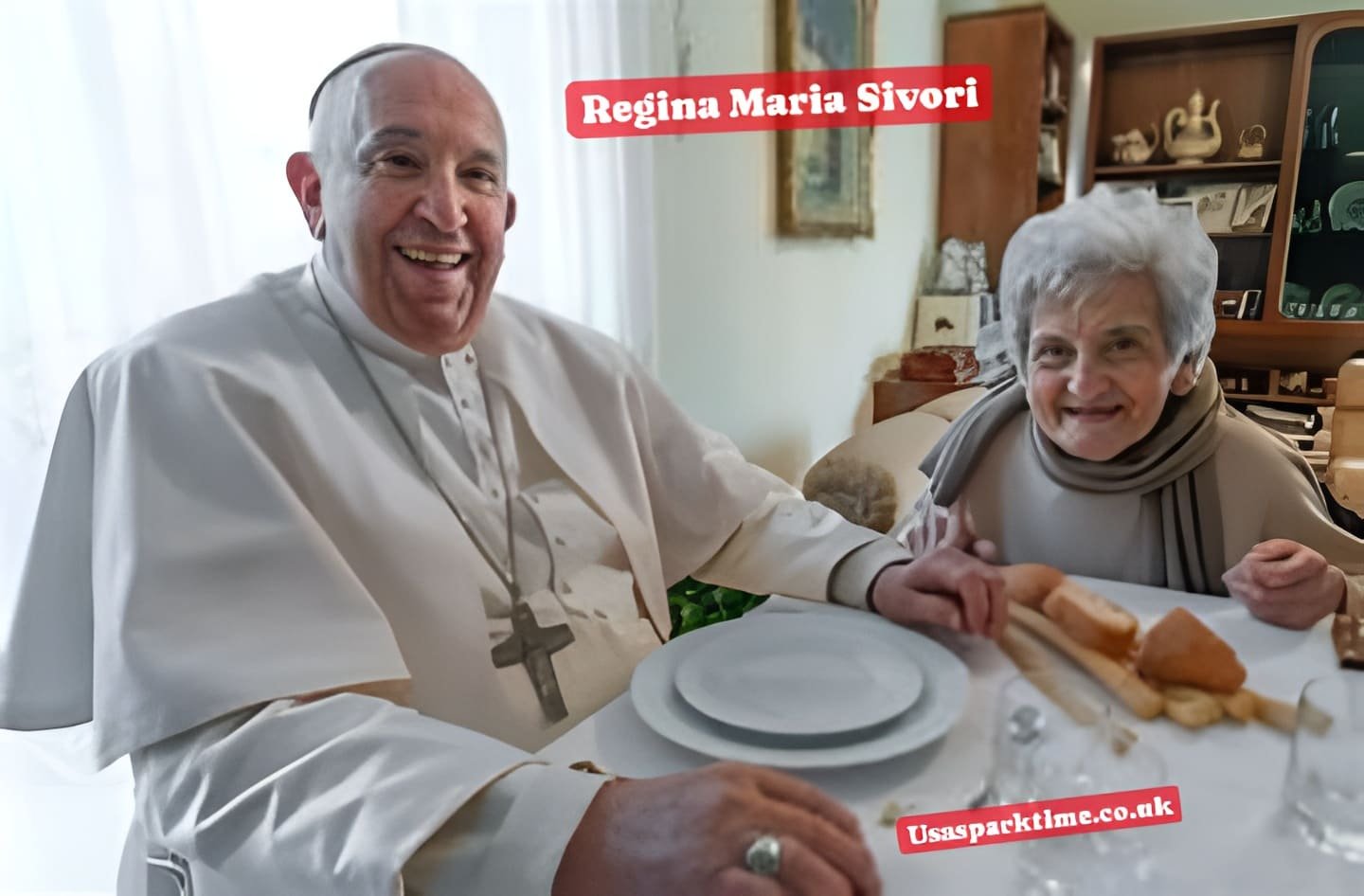
Regina Maria Sivori (November 28, 1911 – January 8, 1981) was the Italian-Argentine mother of Pope Francis, born Jorge Mario Bergoglio. Born in Buenos Aires to Northern Italian immigrant parents, she married Mario José Bergoglio in 1935 and raised five children in the Flores neighborhood. A devout Roman Catholic homemaker, she shaped Pope Francis’s deep faith, humility, and compassion. She died at age 69 and was honored as Mother of the Year in 2015 by the Argentine Senate.
Regina Maria Sivori was a remarkable Italian-Argentine woman best known as the mother of Pope Francis. Born in Buenos Aires in 1911 to Italian immigrant parents from Liguria and Piedmont, she grew up surrounded by deep Catholic faith and rich Italian traditions. She married Mario José Bergoglio in 1935 and dedicated her life to raising five children with discipline, warmth, and unwavering religious devotion. Her influence on her eldest son, Jorge Mario Bergoglio — the future Pope Francis — was profound and lasting. She taught him to pray the rosary, read sacred literature, and live with humility. Though she never sought fame or recognition, the world came to know her name through her son’s extraordinary journey to the Vatican. She passed away in 1981 at the age of 69 and was posthumously honored in 2015 as Mother of the Year.
Quick Bio Table: Regina Maria Sivori at a Glance
| Category | Information |
| Full Name | Regina María Sívori (Maria Regina Sívori Gogna) |
| Date of Birth | November 28, 1911 |
| Place of Birth | Buenos Aires, Argentina |
| Date of Death | January 8, 1981 |
| Age at Death | 69 years old |
| Nationality | Argentine (Italian descent) |
| Ethnicity | Northern Italian — Ligurian & Piedmontese |
| Religion | Roman Catholic |
| Father | Francisco Sívori Sturla (from Liguria, Italy) |
| Mother | María Gogna Demergazzo (from Piedmont, Italy) |
| Spouse | Mario José Francisco Bergoglio (m. December 12, 1935) |
| Children | Jorge Mario (Pope Francis), Oscar Adrián, Marta Regina, Alberto Horacio, María Elena |
| Occupation | Homemaker; devoted mother and family anchor |
| Residence | Flores neighborhood, Buenos Aires, Argentina |
| Known For | Mother of Pope Francis (Jorge Mario Bergoglio) |
| Posthumous Honor | Mother of the Year Award — Argentine Senate, 2015 |
Who Is Regina Maria Sivori? The Woman Behind the World’s Most Beloved Pope
Early Life in Buenos Aires: Italian Roots in Argentine Soil
Regina Maria Sivori was born on November 28, 1911, in the vibrant city of Buenos Aires, Argentina. While Argentina was her birthplace, her cultural identity was deeply anchored in Northern Italy. Her father, Francisco Sívori Sturla, originally came from Liguria, a coastal region in northwestern Italy famous for its warm, hardworking communities. Her mother, María Gogna Demergazzo, came from Piedmont, an area known for its quiet dignity and mountain traditions. Both parents were immigrants who carried their homeland’s culture, language, and faith with them to South America, and they passed all of these values down to their daughter.
A Childhood Shaped by Faith and Italian Heritage
Growing up in an Italian-Argentine household meant that Regina’s early years were filled with a unique blend of two cultures. She heard Italian songs and Spanish prayers in the same home. Her family cooked traditional Northern Italian dishes, observed Catholic feast days with reverence, and gathered around the dinner table to share stories of the old country. This upbringing gave her a strong foundation of identity, purpose, and devotion that would later define her role as a wife and mother. Faith was not just practiced in her household — it was breathed into every corner of daily life.
Growing Into a Woman of Quiet Strength and Deep Character
As a young woman, Regina was described as calm, thoughtful, and deeply principled. She was not a woman who chased attention or recognition. Instead, she found meaning in the small, sacred routines of everyday life — prayer, cooking, family, and community. Those who knew her described her as someone whose strength was not loud or dramatic, but steady and unshakeable. This inner resolve became one of her most defining traits. Long before she became the mother of a Pope, she had already built a life centered on values that the world would one day come to admire through her son.
The Love Story and Marriage That Built the Bergoglio Family
How Regina Met Mario José Bergoglio
Regina’s path crossed with Mario José Francesco Bergoglio in a beautiful and ordinary way — through a Salesian youth oratory in the Almagro neighborhood of Buenos Aires. Mario had emigrated from Italy in 1929 to escape the growing threat of fascism under Mussolini. He was an accountant by profession — steady, hardworking, and deeply Catholic. Their shared Italian heritage, common faith, and similar values made their connection feel natural and meant to be. They spent time getting to know each other within the wholesome environment of their community oratory, where young people gathered for faith, recreation, and fellowship.
The Wedding and Beginning of a New Chapter
On December 12, 1935, Regina and Mario were united in marriage at the Basilica of San Carlos Borromeo y María Auxiliadora in Buenos Aires. The ceremony was a modest, faith-filled celebration that reflected exactly who they were — a couple that valued spiritual commitment over extravagance. This same church later played another significant role in their family story, as it was the very place where their firstborn son, Jorge Mario Bergoglio — later known to the world as Pope Francis — was baptized just one year later in December 1936. The church became a symbol of the family’s Catholic roots and their unbroken bond of faith.
Building a Home in the Flores Neighborhood
After their wedding, Regina and Mario settled in the Flores neighborhood of Buenos Aires, a warm and close-knit working-class community. This area became the setting for nearly all of their married life and family history. Mario worked as a railway employee and accountant while Regina dedicated herself entirely to managing their home and raising their children. Their household was modest but rich in warmth. The sounds of Italian opera often filled their rooms, and Regina would cook traditional meals while the children played. It was a home where love, discipline, and faith were the true currency, not wealth or social standing.
Raising Five Children: Regina’s Greatest Mission in Life
A Mother of Five in a Modest but Loving Household
Life in the Bergoglio home was never quiet. Regina and Mario were blessed with five children: Jorge Mario, Oscar Adrián, Marta Regina, Alberto Horacio, and the youngest, María Elena. Raising five children on a modest income demanded enormous patience, creativity, and dedication. Regina managed it all with grace. She was deeply involved in every child’s daily life — from their studies to their friendships, from their prayers at bedtime to their behavior at school. She ran her household with efficiency and love, ensuring that each child felt seen, valued, and guided. Her role as a mother was never passive; it was purposeful and all-encompassing.
Teaching Values That Would Last a Lifetime
What set Regina apart as a mother was not just the care she gave, but the values she deliberately planted in her children’s hearts. She taught them to pray the rosary as a family, to respect their elders, to share what little they had, and to face hardship without self-pity. She read to them from religious texts and encouraged a love for music, particularly the opera records she and Mario collected. Her youngest daughter, María Elena, later recalled with great warmth how Jorge — the future Pope Francis — became a strong older brother and father figure to the younger children, especially after their father passed away in 1959. These family bonds were cultivated entirely by Regina’s steady, loving presence.
Also read this: Gregory Allan Paul: The Visionary Who Revolutionized Dinosaur Science Forever
Saturday Afternoons: A Sacred Family Ritual
One memory that Pope Francis has shared publicly and with evident nostalgia is the ritual of Saturday afternoons in his childhood home. After lunch, the family would gather in the living room, and Regina would put on an opera record — usually Verdi or Puccini. Before the music began, she would gather the children and explain the story of the opera in simple, engaging terms so they could understand and appreciate what they were hearing. This small weekly tradition was more than entertainment. It was an education in beauty, culture, and attentiveness. It shows just how thoughtfully and creatively Regina approached her role as a mother, always finding ways to enrich her children’s inner lives.
A Woman of Deep Catholic Faith: The Spiritual Core of Her Identity
How Regina’s Faith Shaped Her Family’s Spiritual Identity
Religion was not an obligation in the Sivori-Bergoglio household — it was a living, breathing part of every single day. Regina led her family in daily prayer, attended Mass regularly, and ensured that her children received all the sacraments of the Catholic Church. She prayed the rosary aloud with her children and made the sign of the cross before every meal. For Regina, faith was the lens through which she understood life’s joys and sorrows. Her unwavering devotion to God gave her the strength to raise five children, to hold the family together after Mario’s early death, and to face the ordinary hardships of a modest life without bitterness.
Passing the Torch: Faith from Mother to Pope
It is impossible to understand Pope Francis’s deep humility, his love for the poor, and his devotion to prayer without first understanding his mother. Regina’s influence on Jorge Mario Bergoglio was not just maternal — it was formative at the deepest spiritual level. From her, he learned to see the sacred in the everyday. From her, he received his first understanding of mercy, simplicity, and service. Pope Francis has spoken openly about how his mother’s prayers guided him throughout his life. In one of his most touching reflections, he recalled how she reacted when he told her he wished to enter the priesthood — with quiet trust and pride, even though it meant deep personal sacrifice for her.
Her Legacy as a Model Catholic Woman of the 20th Century
In a century filled with enormous social upheaval, wars, and cultural shifts, Regina Maria Sivori chose a path of quiet devotion. She never became a public figure, never sought recognition, and never chased status. Yet her legacy is extraordinary because it lives on in the words and deeds of the most recognized Catholic leader on the planet. In 2015, the Argentine Senate honored her posthumously with the Mother of the Year Award — a recognition that spoke not only to her sacrifice as a parent, but to her role as an embodiment of the values that make communities strong: faith, family, humility, and unconditional love.
The Final Years of Regina Maria Sivori and Her Enduring Legacy
Life After Mario’s Death and Her Later Years
Regina’s husband Mario José Bergoglio passed away in 1959, leaving her a widow with children still at home. This loss was profound, but Regina did not collapse under the weight of grief. She continued to manage her home, support her children’s lives, and maintain her faith with the same steadiness she had always shown. By this point, Jorge was already pursuing his vocation in the Church, a path she had quietly supported from the beginning. Her other children built their own families and careers, and Regina took pride in each of them. She remained a constant presence in their lives — the anchor of a family that had been shaped entirely by her hands.
Her Death on January 8, 1981
Regina Maria Sivori passed away on January 8, 1981, at the age of 69, in Buenos Aires, Argentina. She was laid to rest at the Cementerio San José de Flores — the same neighborhood where she had built her entire life and raised her family. Her passing was mourned deeply by her children and grandchildren. At the time of her death, Jorge Mario was already a rising figure in the Argentine Catholic Church, having been ordained as a priest in 1969 and later becoming a bishop. He carried her memory with him every step of the way to the Vatican, where he was elected Pope Francis on March 13, 2013 — more than three decades after her passing.
The Posthumous Honor of Mother of the Year — 2015
In 2015, the Argentine Senate made a deeply meaningful gesture by honoring Regina Maria Sivori with the Mother of the Year Award — a posthumous recognition of her extraordinary contribution not only to her family, but to humanity through the values she instilled in her son. The award was received on her behalf by her youngest daughter, María Elena Bergoglio, who spoke warmly about her mother’s character and dedication. This recognition placed Regina alongside the great silent figures of history: the mothers, grandmothers, and homemakers whose names may not appear in headlines, but whose influence shapes the world in ways that no headline ever could.
Conclusion: The Quiet Greatness of Regina Maria Sivori
Regina Maria Sivori was not a politician, a celebrity, or a public intellectual. She was a devoted mother, a woman of deep faith, and the quiet force behind one of the most significant figures in modern religious history. Her life teaches us that true greatness does not always come with applause. Sometimes it arrives in the form of a mother teaching her children to pray, cooking a warm meal, explaining an opera story to curious young ears, or holding a family together through loss and hardship. Through Pope Francis, the world continues to see the reflection of her values — mercy, humility, service, and love. Regina Maria Sivori may have lived a simple life, but her legacy is eternal.
Frequently Asked Questions (FAQs)
1. Who was Regina Maria Sivori?
Regina Maria Sivori (1911–1981) was the Italian-Argentine mother of Pope Francis. Born in Buenos Aires to Italian immigrant parents, she was a devout Catholic homemaker who raised five children and profoundly shaped the values and spiritual life of her son, Jorge Mario Bergoglio.
2. When and where was Regina Maria Sivori born?
She was born on November 28, 1911, in Buenos Aires, Argentina. Although she was born in Argentina, her family background was deeply rooted in Northern Italy, specifically the regions of Liguria and Piedmont, where her parents originated before immigrating to South America.
3. Who were Regina Maria Sivori’s parents?
Her father was Francisco Sívori Sturla, who came from Liguria in Northern Italy. Her mother was María Gogna Demergazzo, originally from Piedmont. Both parents were Italian immigrants who had settled in Buenos Aires and brought their Italian culture, language, and Catholic faith with them to Argentina.
4. When did Regina Maria Sivori marry, and who did she marry?
Regina married Mario José Francesco Bergoglio on December 12, 1935, at the Basilica of San Carlos Borromeo y María Auxiliadora in Buenos Aires. Mario was a railway accountant who had emigrated from Italy in 1929 to escape fascism. Together they had five children, the eldest of whom became Pope Francis.
5. How many children did Regina Maria Sivori have?
Regina and Mario had five children together: Jorge Mario Bergoglio (Pope Francis), Oscar Adrián Bergoglio, Marta Regina Bergoglio, Alberto Horacio Bergoglio, and María Elena Bergoglio, who is the youngest and the only sibling of Pope Francis still living today.
6. When did Regina Maria Sivori die and how old was she?
Regina Maria Sivori passed away on January 8, 1981, in Buenos Aires, Argentina. She was 69 years old at the time of her death. She is buried at the Cementerio San José de Flores in Buenos Aires, in the same neighborhood where she spent most of her life raising her family.
7. What posthumous honor did Regina Maria Sivori receive?
In 2015, the Argentine Senate honored Regina Maria Sivori posthumously with the prestigious Mother of the Year Award. The award recognized her extraordinary dedication as a mother and the values she instilled in her children, particularly in Pope Francis, whose kindness, humility, and compassion are widely seen as direct reflections of her upbringing.
Fore more info: Usasparktime.co.uk
