
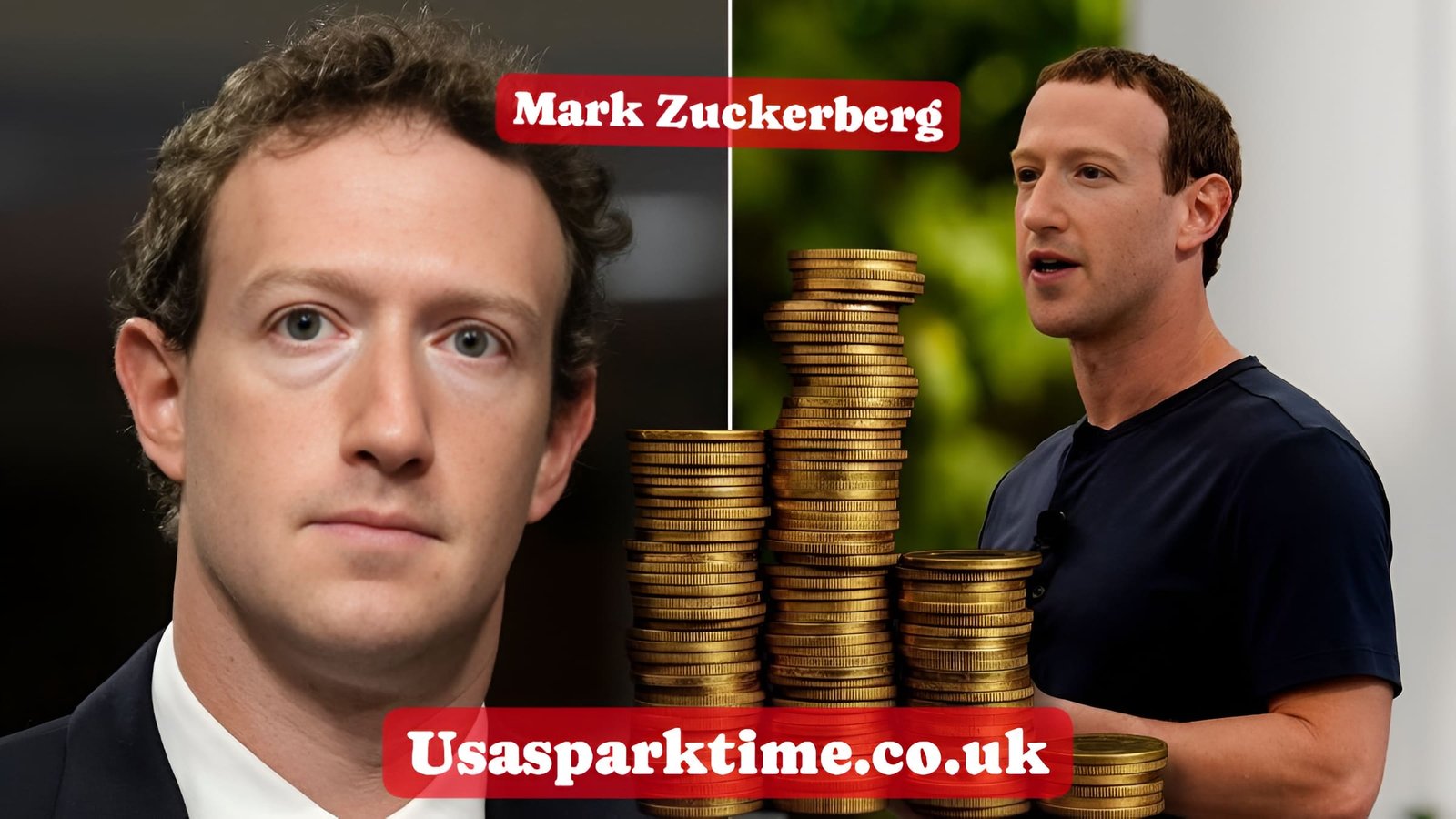
Mark Zuckerberg is the co-founder, chairman, and CEO of Meta Platforms, the company behind Facebook, Instagram, and WhatsApp. Born on May 14, 1984, in White Plains, New York, he launched Facebook from his Harvard dorm room in 2004. As of 2026, his net worth stands at approximately $220–228 billion, making him one of the top five richest people in the world.
Mark Zuckerberg is one of the most influential technology leaders of the 21st century. As co-founder and CEO of Meta Platforms, he transformed a college social network into a global digital empire connecting over 3.5 billion people daily. Born in 1984 in New York, Zuckerberg showed coding talent from childhood, built Facebook at Harvard, and dropped out to chase his vision in Silicon Valley. Today, Meta generates over $201 billion in annual revenue and leads advancements in artificial intelligence, smart wearables, and virtual reality. Zuckerberg’s 2026 focus on “personal superintelligence” and AI-powered smart glasses signals the next era of his extraordinary career. His philanthropic work through the Chan Zuckerberg Initiative further defines his complex, enduring legacy.
Quick Bio Table
| Detail | Information |
| Full Name | Mark Elliot Zuckerberg |
| Date of Birth | May 14, 1984 |
| Age (2026) | 41 years old |
| Birthplace | White Plains, New York, USA |
| Nationality | American |
| Education | Harvard University (dropped out) |
| Occupation | Entrepreneur, Software Developer, CEO |
| Company | Meta Platforms (Facebook, Instagram, WhatsApp) |
| Net Worth (2026) | ~$220–228 Billion USD |
| Spouse | Priscilla Chan (married May 19, 2012) |
| Children | Three daughters |
| Known For | Co-founding Facebook, leading Meta |
Introducing Who Is Mark Zuckerberg?
Mark Zuckerberg is the American technology entrepreneur who co-founded Facebook in 2004 and went on to build one of the most powerful companies in the world. As the chairman and CEO of Meta Platforms — the parent organization behind Facebook, Instagram, WhatsApp, and Threads — Zuckerberg has reshaped how billions of people communicate, share information, and experience the digital world. At just 41 years old in 2026, he remains the youngest billionaire in the global top ten, a position that speaks volumes about his extraordinary journey from a teenage coder to a tech titan worth over $220 billion. His name is now synonymous with social media, digital advertising, and increasingly, the future of artificial intelligence.
Early Life and Childhood of a Born Programmer
Mark Elliot Zuckerberg was born on May 14, 1984, in White Plains, New York, into a highly educated, close-knit family. His father, Edward Zuckerberg, ran a dental practice from the family home in Dobbs Ferry, New York, while his mother, Karen Kempner, worked as a psychiatrist. Growing up in a household that valued both science and intellect, Mark quickly demonstrated an unusual aptitude for computers. He was reportedly using his father’s computer and teaching himself programming languages by the age of ten — years before most of his classmates even owned a personal computer.
The Atari BASIC Days and Early Software Projects
By his early teens, Zuckerberg had already created several software programs that caught the attention of adults around him. One of his most notable early projects was a music messaging program called ZuckNet, which he built so his father’s dental receptionist could alert the family when patients arrived without shouting across the house. His father later hired a private computer tutor, David Newman, who described the young Zuckerberg as a prodigy who was difficult to teach because he learned so fast. This thirst for problem-solving through code would become the defining characteristic of his life’s work and the foundation of everything he would later build.
Phillips Exeter Academy and Academic Excellence
Zuckerberg attended Phillips Exeter Academy, one of America’s most prestigious prep schools, where he excelled not only in computer science but also in classics, Latin, and ancient Greek. He was captain of the fencing team, demonstrating that his abilities extended far beyond the digital world. At Exeter, he developed a program called Synapse, a music recommendation system that used machine learning to understand a listener’s habits — a concept strikingly similar to what Spotify and Apple Music would later commercialize. Both AOL and Microsoft reportedly offered to buy Synapse and hire the teenage Zuckerberg, but he turned them down, choosing instead to attend Harvard University.
Arriving at Harvard With Big Ideas
When Zuckerberg enrolled at Harvard in 2002, he quickly built a reputation as someone who could write code faster and more elegantly than almost anyone else on campus. His first notable Harvard project was CourseMatch, which helped students choose classes based on what other students were selecting. Then came Facemash, a website that pulled photos from Harvard’s student directories and asked visitors to compare two students and vote on who was more attractive. The site went viral almost instantly, overwhelming Harvard’s network servers within hours and prompting the university to shut it down and issue Zuckerberg a formal reprimand. That reckless brilliance — the willingness to build fast and ask permission later — would become his defining entrepreneurial trait.
The Birth of Facebook and the Journey to Silicon Valley
In February 2004, Zuckerberg launched “TheFacebook” from his Harvard dorm room alongside roommates Eduardo Saverin, Andrew McCollum, Dustin Moskovitz, and Chris Hughes. The site was initially exclusive to Harvard students, but within weeks it expanded to Columbia, Yale, and Stanford. The growth was explosive. By December 2004, Facebook had nearly one million users. Zuckerberg made the decisive choice to drop out of Harvard in his sophomore year and relocate the operation to Palo Alto, California, where venture capitalist Peter Thiel provided a crucial early investment of $500,000. That bet on a twenty-year-old dropout would prove to be one of the greatest investments in technology history.
Legal Battles, Lawsuits, and ConnectU Controversy
The rapid rise of Facebook was accompanied by serious legal disputes that would follow Zuckerberg for years. Harvard students Cameron Winklevoss, Tyler Winklevoss, and Divya Narendra sued him, claiming he had stolen their idea for a social network called HarvardConnection — later renamed ConnectU — and used access to their project to develop Facebook instead. This lawsuit was eventually settled for approximately $65 million in cash and Facebook shares. Co-founder Eduardo Saverin was also cut from the company during its early growth phase, leading to another major legal battle. These controversies were later dramatized in David Fincher’s 2010 film “The Social Network,” which brought Zuckerberg’s complicated origin story to worldwide audiences.
Facebook’s Explosive Global Growth
Between 2006 and 2010, Facebook grew from a niche college network into a global phenomenon. Zuckerberg opened the platform to anyone over the age of 13 in 2006, a decision that triggered extraordinary worldwide growth. By 2010, Facebook had surpassed 500 million users, and Time magazine named Zuckerberg its Person of the Year. The platform was changing the nature of human connection itself — creating a new digital public square where people shared their lives, debated ideas, consumed news, and organized communities. Zuckerberg remained deeply involved in product decisions throughout this growth, insisting on a user-first philosophy that prioritized engagement above almost every other metric.
Also read this: Jeff Sessler: The Rock Insider Who Lived in the Shadows of Legend
The Facebook IPO — Biggest Tech Debut in History
In May 2012, Facebook went public in what was at the time the largest technology IPO in history, valued at approximately $104 billion. Zuckerberg retained majority control through a dual-class share structure, ensuring he could not be outvoted by other shareholders regardless of how many shares they held. Despite a rocky first day of trading and early concerns about Facebook’s ability to generate mobile advertising revenue, the company adapted aggressively. Mobile became its primary revenue driver, and Facebook’s advertising technology became so sophisticated and targeted that it fundamentally transformed the global advertising industry. By 2020, Facebook’s net worth had soared to over $100 billion on paper.
Building the Meta Empire — Acquisitions and Strategic Vision
One of Zuckerberg’s most remarkable strategic achievements has been his ability to identify and acquire emerging threats to Facebook before they could become serious competitors. His two most celebrated acquisitions — Instagram for approximately $1 billion in 2012 and WhatsApp for approximately $19 billion in 2014 — are now widely regarded as among the greatest deals in corporate history. At the time, both purchases were heavily criticized as overpayments for relatively small companies. In hindsight, they were masterstrokes that gave Meta dominance across multiple pillars of global digital communication and expanded its reach into markets where Facebook itself was not the preferred platform.
Rebranding to Meta and the Metaverse Ambition
In October 2021, Zuckerberg made one of the boldest and most controversial decisions of his career: he rebranded Facebook Inc. as Meta Platforms, signaling a strategic pivot toward building the “metaverse” — a vision of immersive, interconnected virtual worlds where people would live, work, and socialize. The rebranding was met with significant skepticism and media mockery, and Meta’s Reality Labs division lost tens of billions of dollars developing VR hardware and software. The company’s stock plummeted through 2022 as advertisers pulled back and the metaverse vision failed to materialize quickly. Critics questioned whether Zuckerberg had fundamentally misjudged the direction of consumer technology.
The AI Pivot and Meta’s Stunning Comeback
Beginning in 2023, Zuckerberg engineered one of the most remarkable corporate turnarounds in technology history. He refocused Meta on artificial intelligence, dramatically improving the company’s advertising systems through AI-powered targeting and launching the open-source Llama family of large language models. Meta’s stock rebounded explosively, reaching new all-time highs. By 2025, Meta reported annual revenue of $201 billion — a 22 percent increase from the previous year — and its family of apps reached 3.58 billion daily active users. Zuckerberg had successfully reframed Meta not as a struggling social media company but as a leading AI infrastructure company with unparalleled user data advantages.
Smart Glasses, Wearables, and the Road to Superintelligence
In 2026, Zuckerberg is steering Meta toward what he calls “personal superintelligence” — AI systems that understand individual users deeply enough to act as personalized life assistants. Meta’s Ray-Ban smart glasses, developed in partnership with EssilorLuxottica, became some of the fastest-growing consumer electronics products in history, with sales tripling in 2025. Zuckerberg has described these glasses as the future primary computing device, capable of seeing what users see, hearing what they hear, and providing contextual AI assistance throughout the day. His AGI research team has recruited elite talent from OpenAI, Google DeepMind, and other top AI labs, with compensation packages reportedly reaching $300 million over four years for the most sought-after researchers.
Net Worth, Wealth, and Financial Power in 2026
Mark Zuckerberg’s net worth in 2026 is estimated at approximately $220–228 billion by Bloomberg and Forbes, placing him among the top five wealthiest individuals on the planet. The vast majority of this wealth derives from his roughly 13 percent ownership stake in Meta Platforms, which means his personal fortune fluctuates in real time with Meta’s stock price. He is notable for receiving just $1 per year as his official CEO salary, with the bulk of his compensation tied entirely to his equity stake in the company. In October 2024, Zuckerberg briefly became the second richest person in the world, and by early 2025 his net worth had touched $251 billion according to some Forbes estimates, driven by Meta’s AI-fueled stock surge.
Real Estate Portfolio and Lifestyle
Zuckerberg’s real estate holdings reflect both his enormous wealth and his preference for privacy and security. He owns an extensive compound in the Crescent Park neighborhood of Palo Alto, multiple properties in Hawaii spanning hundreds of acres, and homes in San Francisco and Lake Tahoe, with a total real estate portfolio valued at around $320 million. In March 2026, he and his wife Priscilla Chan purchased a property on Indian Creek Island in Miami — popularly known as the “Billionaires’ Bunker” — for a Miami-Dade County record price of $170 million. Despite his vast wealth, Zuckerberg was for many years famous for his deliberately understated personal style, typically seen in the same gray T-shirt and jeans. Since 2024, he has visibly embraced a more stylish, trend-conscious image, wearing gold chains and designer streetwear.
Chan Zuckerberg Initiative and Philanthropy
In December 2015, on the same day their first daughter Maxima was born, Zuckerberg and his wife Priscilla Chan announced the Chan Zuckerberg Initiative (CZI), pledging to donate 99 percent of their Meta shares over the course of their lifetimes to advance education, science, and equal opportunity. This pledge represented what was then one of the largest philanthropic commitments in history. The initiative has since funded cutting-edge biomedical research, including a declared goal to cure, prevent, or manage all human diseases by the end of the century. CZI has donated hundreds of millions of dollars to schools, scientific research institutions, and communities across the United States, reflecting the couple’s belief that technology and medicine can dramatically improve the human condition.
Personal Life, Family, and Cultural Impact
Mark Zuckerberg married his longtime partner Priscilla Chan on May 19, 2012 — just one day after Facebook’s landmark IPO. The couple met at Harvard during their freshman year and maintained their relationship through Facebook’s turbulent early years. They have three daughters together: Maxima (Max), born in December 2015; August, born in August 2017; and Aurelia, born in March 2023. Zuckerberg has described fatherhood as deeply transformative, often crediting his children with sharpening his sense of purpose and responsibility. The family was as of 2025 living primarily on their large compound in Palo Alto, though their Miami acquisition in 2026 signals an expanding geographic footprint.
From Gray T-Shirts to Cultural Reinvention
For most of his public career, Zuckerberg was caricatured as a robotic, socially awkward figure — a perception reinforced by Jesse Eisenberg’s portrayal in “The Social Network” and by Zuckerberg’s own stilted performances in Congressional hearings. His trademark uniform of identical gray T-shirts was framed as either an eccentric billionaire’s quirk or evidence of his discomfort with the messiness of human culture. Since 2024, however, Zuckerberg has undergone a visible personal reinvention. He began sharing videos of his mixed martial arts training, adopted a new wardrobe of streetwear and gold chains, and cultivated a new public persona that writers at Vanity Fair described as a deliberate rebranding coinciding with Meta’s political realignments.
Political Influence and Public Controversy
Zuckerberg’s political impact has been as significant as his technological one, and often far more controversial. Facebook’s role in the 2016 US presidential election — including the Cambridge Analytica data scandal in which the personal data of up to 87 million users was improperly shared with a political consulting firm — triggered massive regulatory scrutiny and multiple Congressional hearings. Zuckerberg’s 2018 Senate testimony, during which he patiently answered questions that sometimes betrayed a basic misunderstanding of how social networks function, became a cultural moment. In 2026, he was appointed to the President’s Council of Advisors on Science and Technology (PCAST) by President Donald Trump, signaling a new phase in his relationship with American political power.
Conclusion
Mark Zuckerberg’s story is one of the most remarkable in modern history — a teenager who taught himself to code in his bedroom and ended up reshaping how three and a half billion people experience daily life. From the chaotic launch of TheFacebook in a Harvard dormitory to the multi-hundred-billion-dollar Meta empire of 2026, his journey has been defined by audacious ambition, relentless reinvention, and an almost supernatural capacity to bounce back from failure. As he now races toward personal superintelligence and AI-powered smart glasses, Zuckerberg remains exactly what he has always been: a programmer who wants to change the world, regardless of the controversy it generates.
FAQs About Mark Zuckerberg
Q1: Who is Mark Zuckerberg?
Mark Zuckerberg is the American tech entrepreneur who co-founded Facebook in 2004 and now serves as CEO and chairman of Meta Platforms, the parent company of Facebook, Instagram, and WhatsApp.
Q2: What is Mark Zuckerberg’s net worth in 2026?
As of 2026, his net worth is estimated at approximately $220–228 billion according to Bloomberg and Forbes, making him one of the five richest people in the world.
Q3: Did Mark Zuckerberg graduate from Harvard?
No. Zuckerberg dropped out of Harvard in his sophomore year in 2004 to focus on building Facebook full-time after relocating to Silicon Valley.
Q4: Who is Mark Zuckerberg’s wife?
He is married to Priscilla Chan, a physician and philanthropist. They married on May 19, 2012, and have three daughters together.
Q5: What is Meta Platforms?
Meta Platforms is the technology company that Zuckerberg renamed from Facebook Inc. in October 2021. It owns Facebook, Instagram, WhatsApp, and Threads, and is a major investor in AI and virtual reality.
Q6: What is the Chan Zuckerberg Initiative?
The Chan Zuckerberg Initiative (CZI) is a philanthropic organization co-founded by Zuckerberg and Priscilla Chan in 2015. They pledged to donate 99% of their Meta shares over their lifetimes to advance education, science, and equal opportunity.
Q7: What is Mark Zuckerberg’s vision for AI in 2026?
Zuckerberg is pursuing “personal superintelligence” — AI that deeply understands individual users and assists them throughout their daily lives, primarily delivered through Meta’s AI-powered smart glasses developed in partnership with Ray-Ban.
Fore more info: Usasparktime.co.uk
