
Introduction
Genetics is one of the most fascinating fields of biology, helping us understand how traits are passed from parents to offspring. At the core of genetics lies the concept of genotype, which plays a crucial role in determining an organism’s characteristics. If you are a student or someone new to biology, understanding a genotype example can make this concept much easier to grasp.
In simple terms, a genotype refers to the genetic makeup of an organism—the specific combination of genes inherited from its parents. These genes carry instructions that influence everything from eye color to height and even certain behaviors. In this article, we will explore what genotype means, how it differs from phenotype, and walk through clear and simple genotype examples to build a strong understanding.
What is Genotype?
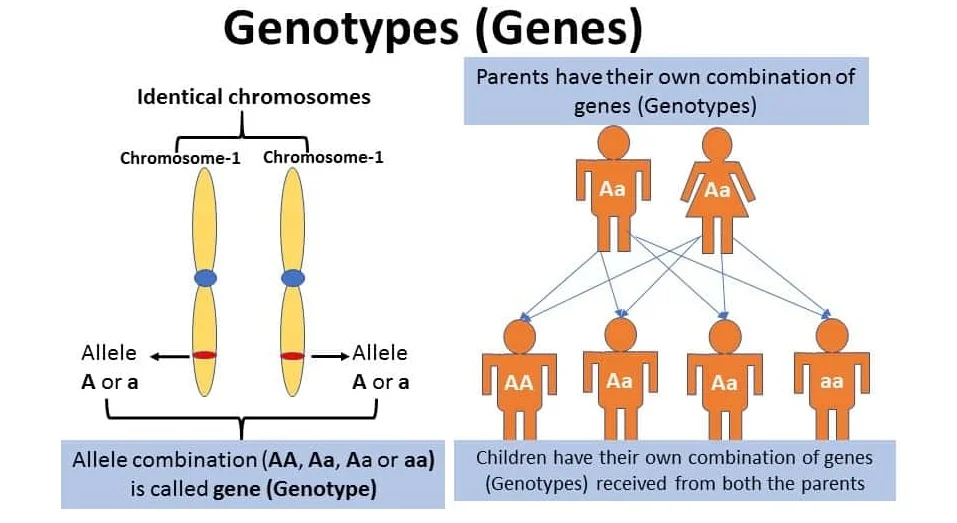
A genotype is the set of genes or alleles present in an organism. These alleles can be dominant or recessive, and they work together to influence traits. Every individual inherits two alleles for each gene—one from each parent.
For example:
- If “A” represents a dominant allele and “a” represents a recessive allele:
- AA = Homozygous dominant
- Aa = Heterozygous
- aa = Homozygous recessive
This combination is what we call the genotype.
Genotype vs Phenotype
Before diving deeper into a genotype example, it’s important to understand the difference between genotype and phenotype.
- Genotype: The genetic makeup (e.g., AA, Aa, aa)
- Phenotype: The observable trait (e.g., brown eyes, blue eyes)
For instance, a person may have the genotype Aa, but if the dominant allele (A) codes for brown eyes, the phenotype will be brown eyes—even though the recessive allele (a) is present.
Basic Genotype Example
Let’s look at a simple genotype example using flower color in pea plants, a classic study conducted by Gregor Mendel.
- Purple flower allele = P (dominant)
- White flower allele = p (recessive)
Possible genotypes:
- PP = Purple flowers
- Pp = Purple flowers
- pp = White flowers
In this genotype example, both PP and Pp result in purple flowers because the dominant allele (P) masks the recessive allele (p). Only pp produces white flowers.
Punnett Square and Genotype Example
A Punnett square is a tool used to predict the probability of different genotypes in offspring. It helps visualize how alleles combine during reproduction.
Let’s say:
- Parent 1 genotype = Pp
- Parent 2 genotype = Pp
Possible combinations:
| P | p | |
| P | PP | Pp |
| p | Pp | pp |
Results:
- 25% PP
- 50% Pp
- 25% pp
This genotype example clearly shows how traits are inherited and the probability of each genetic outcome.
Types of Genotypes
Understanding different types of genotypes helps in analyzing genetic outcomes more effectively.
1. Homozygous Genotype
When both alleles are the same:
- AA (dominant)
- aa (recessive)
2. Heterozygous Genotype
When alleles are different:
- Aa
In many genotype examples, heterozygous combinations are important because they carry both dominant and recessive traits.
Real-Life Genotype Example
Let’s consider a human trait—eye color.
- Brown eye allele = B (dominant)
- Blue eye allele = b (recessive)
Possible genotypes:
- BB = Brown eyes
- Bb = Brown eyes
- bb = Blue eyes
If both parents have Bb genotype:
- Their child could have BB, Bb, or bb
This real-world genotype example helps explain why two brown-eyed parents can sometimes have a blue-eyed child.
Why Genotype Matters
Genotype is important because it determines the potential traits an organism can express. It also plays a key role in:
- Understanding inherited diseases
- Predicting genetic disorders
- Studying evolution and variation
- Advancing medical research
For example, certain genetic conditions like cystic fibrosis or sickle cell anemia depend on specific genotypes.
Genotype and Genetic Disorders
Some diseases are directly linked to genotype. For instance:
- Recessive disorders: Only appear if an individual has two recessive alleles (aa)
- Dominant disorders: Can appear even if only one dominant allele is present (Aa or AA)
A genotype example in this context would be:
- If “d” is a disease allele:
- dd = affected
- Dd = carrier
- DD = healthy
Understanding such genotype patterns helps doctors and scientists predict risks and provide better treatments.
Genotype Example in Agriculture
Genetics is widely used in agriculture to improve crops and livestock. Farmers select plants with desirable genotypes to produce better yields, disease resistance, and improved quality.
For example:
- A plant with genotype RR (resistant) is more likely to survive diseases compared to rr (susceptible).
This type of genotype example is essential in modern farming and food production.
How Environment Affects Genotype Expression
Although genotype provides the genetic blueprint, the environment can influence how genes are expressed.
For example:
- A person may have genes for tall height, but poor nutrition can prevent them from reaching that potential.
This shows that genotype and environment work together to shape the final outcome.
Common Mistakes When Understanding Genotype
Many beginners confuse genotype with phenotype or misunderstand dominance. Here are a few common mistakes:
- Assuming dominant traits are always more common
- Thinking recessive traits are weak or unimportant
- Confusing genotype combinations
Studying each genotype example carefully can help avoid these misunderstandings.
Conclusion
Understanding genotype is fundamental to learning genetics. It represents the genetic makeup that determines how traits are inherited and expressed. Through simple explanations and clear examples, the concept becomes much easier to understand.
In this article, we explored multiple genotype examples, from basic Mendelian inheritance to real-life human traits. These examples show how genes interact and how traits are passed from one generation to the next.
Whether you are a student, teacher, or just curious about biology, mastering the concept of genotype will give you a strong foundation in genetics. Keep practicing with different genotype examples, and soon you will find this topic both simple and fascinating.
