
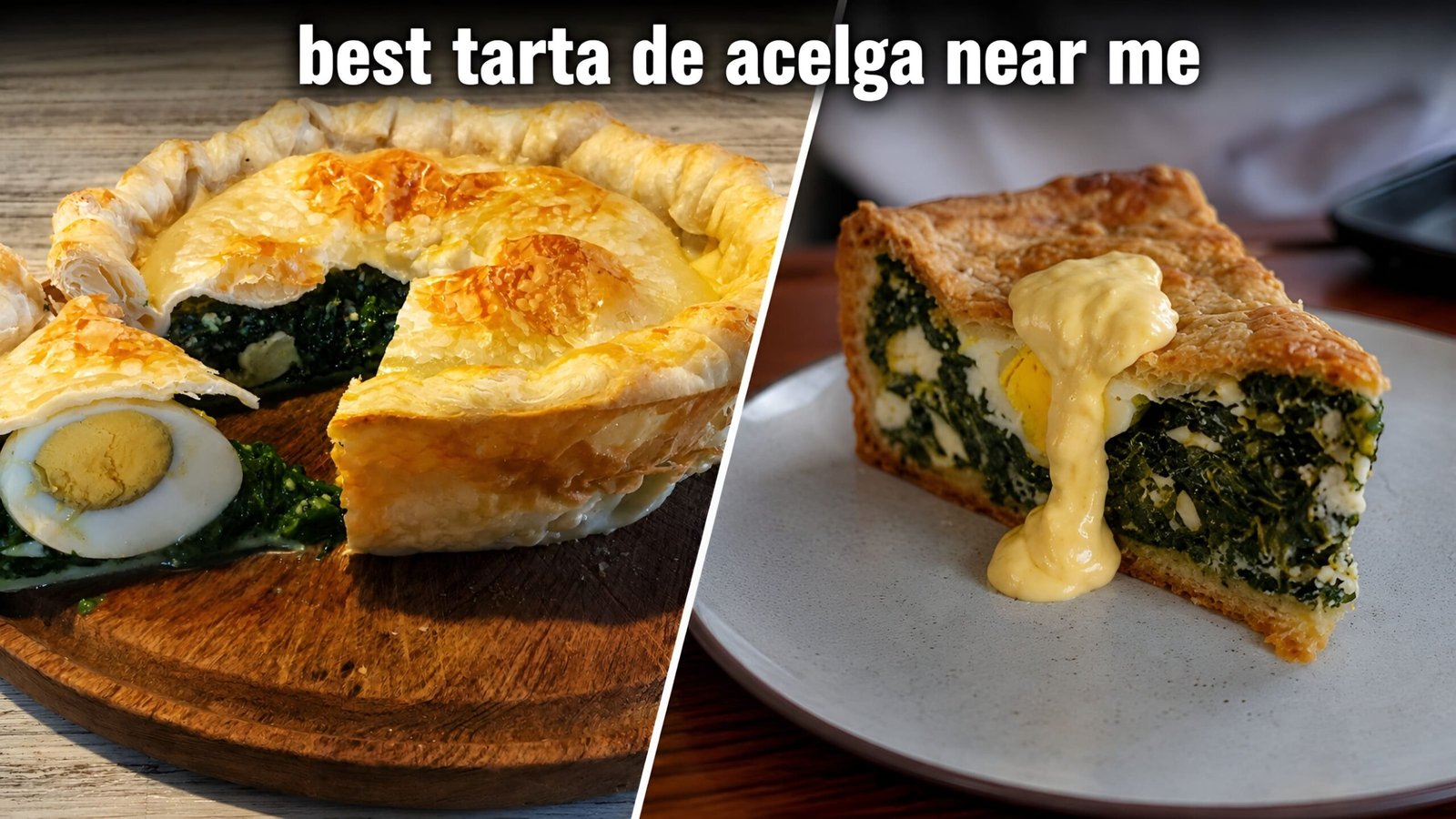
Tarta de acelga is a traditional Argentine and Uruguayan savory pie filled with Swiss chard, eggs, cheese, and onions inside a golden flaky crust. To find the best tarta de acelga near me, search Google Maps for Argentine bakeries, Latin American restaurants, or Mediterranean pastry shops. Use alternate terms like “spinach pie,” “tarta pascualina,” or “Swiss chard tart” for broader results.
What Is Tarta de Acelga? Understanding the Dish Behind Your Search
Tarta de acelga is a beloved savory pie whose roots stretch from Liguria, Italy to the shores of South America. When Italian immigrants arrived in Argentina and Uruguay over a century ago, they brought their tradition of baking vegetables inside pastry with them. Over generations, local ingredients — Swiss chard, fresh cheeses, and locally-sourced eggs — blended with that Mediterranean baking tradition to create something uniquely Rioplatense. Today, asking “where is the best tarta de acelga near me” is really asking where you can find a slice of that culinary history.
In Argentina and Uruguay particularly, this dish sits firmly in the everyday-food category. It is not reserved for celebrations or fancy dinners. You find it cut in thick slices at neighbourhood bakeries called panaderías, served on weekday lunch menus, packed for picnics, or sold by the portion at rotiserías — the casual takeaway-style shops beloved across the Río de la Plata. This unpretentious reputation is exactly what makes people miss it deeply when they travel or move abroad.
The Origin Story: From Italian Kitchens to Argentine Tables
The precise ancestor of tarta de acelga is the torta pasqualina of the Liguria region in northern Italy, a deep Easter pie filled with chard, ricotta, and whole eggs baked directly into the filling. When Ligurian immigrants arrived in Buenos Aires and Montevideo in the late 19th and early 20th centuries, they recreated this dish using locally available Swiss chard and their own creativity. Over decades it evolved from a seasonal Easter specialty into a year-round household staple eaten by people of all backgrounds.
A parallel version called pastel de acelga took root in Peru through similar Italian immigration patterns, while Gibraltar developed its own distinct torta de acelgas tradition, typically prepared at Easter as a meat-free festive dish. This wide geographic spread across continents shows just how universally appealing the combination of silky greens, creamy cheese, and flaky pastry really is. Knowing this history helps you understand why authenticity matters so much when searching for the best version locally.
Core Ingredients That Define a Truly Great Tarta de Acelga
The soul of any great tarta de acelga lies in the quality and balance of four core components: the pastry crust, the chard filling, the cheese layer, and the eggs. A proper crust should be short and golden — buttery enough to hold its shape when sliced but never so thick that it overwhelms the filling. The Swiss chard, known as acelga in Spanish, must be properly drained after blanching or wilting; excess moisture is the most common reason a crust turns soggy and disappointing.
Cheese varies by tradition and baker. Argentine versions frequently use queso crema (cream cheese) or a blend of mozzarella and parmesan for a stretchy, savoury bite. The Peruvian pastel de acelga leans on a béchamel sauce for richness. The Gibraltar torta de acelgas is notably firm and garlicky, with a high egg and cheese content that sets into a dense, satisfying slice. Whole eggs may be baked directly into the filling — a visual and textural signature of the pascualina style — or pre-scrambled and folded throughout. Each variation is valid; knowing which you prefer helps you ask the right questions when you visit a local bakery.
How to Search Smarter: Finding the Best Tarta de Acelga Near Me
The biggest challenge when looking for the best tarta de acelga near me is that many excellent small businesses do not use the traditional Spanish name online. A fantastic Argentine bakery in your city might label it simply as “spinach pie,” “green tart,” or “vegetable pastry” on their menu. This means a single Google search using only the Spanish term may return zero relevant local results even when a perfect version exists five minutes away.
Broaden your search with alternate terms: try “tarta pascualina near me,” “Argentine bakery near me,” “Swiss chard pie near me,” “spinach ricotta tart,” and “tartas saladas near me.” On Google Maps, filter by “Latin American restaurant,” “Spanish bakery,” or “Mediterranean deli.” Spanish-language searches like panadería argentina, rotisería, or tartas caseras often surface small family-run businesses that primarily market to Spanish-speaking communities. These are frequently the most authentic and freshest options in any city.
Using Google Maps and Review Platforms Like a Local Food Expert
Google Maps remains the most powerful tool for locating quality local food. When searching for a nearby savory chard pie, do not just look at the star rating — read the actual text reviews. Customers who care about authenticity will often mention specific details: whether the crust is homemade or bought-in, whether the filling tastes fresh versus frozen, and whether the slice holds together cleanly when cut. A business with 4.2 stars and fifty reviews mentioning “flaky crust” and “fresh filling” is more trustworthy than a 4.9-star bakery with only three generic reviews.
Look closely at photos uploaded by real customers rather than the business’s own marketing images. A genuine customer photo taken on a phone during lunch reveals far more about actual quality — portion size, colour of the crust, moisture level of the filling — than a professionally lit studio shot. Businesses that consistently receive photos of their food from happy customers are typically producing something worth visiting for.
What Separates an Excellent Slice from a Mediocre One
Quality differences in tarta de acelga are obvious once you know what to look for. The crust should be uniformly golden-brown with a slight sheen — evidence of proper egg washing before baking. It should hold firm when lifted by hand without crumbling or bending. The underside of the crust is equally important; a well-baked tarta has a dry, lightly crisp base, not a pale or damp one, which indicates the filling’s moisture was properly managed before assembly.
Inside, the chard filling should look vibrant green, never grey or olive-dull from overcooking. It should feel creamy and cohesive rather than watery or stringy. A properly made filling contains enough egg and cheese to bind everything together, so each slice cuts cleanly and stands upright on a plate. Any pooling liquid beneath the slice suggests inadequate draining of the chard — a foundational step that separates a careful baker from a careless one.
Argentine Bakeries vs. Latin Restaurants: Where to Find the Best Version
If your city has an Argentine or Uruguayan bakery, that is almost certainly your best first stop. These establishments are culturally invested in getting the dish right because it represents their identity and feeds their core community. Regulars will return specifically because the tarta tastes like home — which means the baker has strong incentive to keep standards high. Look for panaderías or rotiserías with hand-written menus, family photographs on walls, or a glass display case filled with various savoury pies alongside facturas (Argentine pastries).
Latin American restaurants with a broader menu are a reasonable second option, though quality varies more widely. Some produce an excellent tarta because it fits naturally within their kitchen’s skills; others offer it as an afterthought alongside empanadas and medialunas. Spanish tapas bars and Mediterranean delis are dark-horse options — particularly in cities like London, Madrid, or Barcelona — because their kitchens often make similar vegetable pies under local names. Do not overlook Middle Eastern grocers either: fatayer bi-sabanekh (spinach triangle pies) use a comparable filling philosophy and a skilled baker in that tradition often handles leafy green pastries beautifully.
Seasonal Availability and the Best Time to Visit
While tarta de acelga is technically a year-round dish, there are seasonal patterns worth knowing. Swiss chard is most abundant and flavourful from late spring through autumn, meaning the filling will taste noticeably fresher and less bitter during those months. Bakeries that source their chard from local markets or farms rather than buying frozen year-round tend to produce a superior filling in season — this is worth asking about directly when you visit.
In Gibraltar and parts of southern Spain, the dish is traditionally associated with Easter week (Semana Santa), when it serves as the meat-free centrepiece of the festive table. During this period, established bakeries in those regions bake it in enormous rectangular trays — one recipe yields up to 48 slices — and it sells out quickly. If you are visiting those areas around Easter, plan to arrive early in the morning. Argentine bakeries in other countries may also increase production around Easter out of cultural habit, even when they serve the pie all year.
Nutritional Value: Why Tarta de Acelga Is More Than Just a Comfort Food
Swiss chard is one of the most nutrient-dense leafy greens available, containing significant quantities of vitamins K, A, and C, magnesium, potassium, and dietary fibre. When paired with eggs and cheese inside a pastry, a single generous slice of tarta de acelga delivers complete protein, healthy fats, complex carbohydrates, and a broad spectrum of micronutrients in one satisfying portion. This makes it considerably more nutritionally complete than most takeaway snacks of similar convenience.
For people seeking vegetarian options that feel genuinely filling, this dish is an outstanding choice. The combination of cheese protein, egg protein, and fibre from the chard creates a sustained feeling of satiety that many plant-based options lack. If you are watching calories, thinner-crust versions prepared by bakeries that use less butter in their dough offer a lighter option without sacrificing the essential character of the dish. Asking whether the kitchen uses a short-crust or puff-pastry base will help you judge the likely calorie content before ordering.
How to Judge a Bakery’s Commitment to Quality Before You Order
Before spending money at an unfamiliar bakery or restaurant, a few simple observations can tell you a great deal about their standards. Watch whether the staff handles the pie with care — proper slicing with a sharp, clean knife rather than a rough sawing motion preserves the filling’s structure and reveals the baker’s pride in presentation. Ask whether the tarta is made fresh that day or reheated from the previous day; a good bakery will answer honestly, and day-fresh is always preferable.
Ingredient transparency is another strong signal. A confident baker knows exactly what goes into their recipe and will tell you willingly: the type of cheese, whether the chard is fresh or frozen, and what fat is used in the pastry. Vague or dismissive answers suggest a less thoughtful kitchen. Similarly, a bakery that offers several varieties of savoury tarta — de acelga, de choclo (corn), de jamón y queso — has invested in developing genuine pastry skills across its team, which raises the likely quality of each individual product.
The Role of Social Media in Discovering Hidden Local Gems
Some of the finest tarta de acelga available locally will never appear on TripAdvisor or Yelp. Small home bakers, weekend market vendors, and community kitchen collectives produce exceptional versions that exist entirely on Instagram, WhatsApp groups, and local Facebook communities. Searching Instagram hashtags like #tartadeacelga, #tartapascualina, #panaderiaargentina, or #tartasalada alongside your city name can surface bakers who sell from home or at farmers’ markets with no permanent shop address.
TikTok has become surprisingly useful for discovering this type of local food business, particularly among younger Latin American community members who document their family baking. A short video showing someone pulling a golden-brown tarta from a home oven and cutting it into thick, perfect slices can be a more reliable quality indicator than any written review. Follow local food discovery accounts in your city and engage with the Latin American food community online — word-of-mouth recommendations within that community are exceptionally reliable.
Making Tarta de Acelga at Home When No Local Option Exists
If your area genuinely lacks a source for authentic tarta de acelga, making it at home is entirely achievable for a competent home cook. The process requires two main tasks: preparing a short-crust or puff pastry base, and creating the filling from properly drained chard, sautéed onions, beaten eggs, and your choice of cheese. The most critical technique is removing moisture from the chard after blanching or wilting — squeeze it firmly in a clean towel or press it through a colander before mixing it with the other filling ingredients.
Most recipes assemble the pie in a standard 23–28cm round tin or a rectangular baking dish for larger batches. The bottom crust goes in first, followed by the filling packed evenly to the edges, and then the top crust is laid over and sealed with a crimp or twist (repulgue in Argentine tradition). Brush with egg wash for a glossy finish and bake at 180°C for 40–55 minutes until deeply golden. Rest for at least fifteen minutes before slicing — this allows the filling to set and produces the clean, firm slices that make the dish so satisfying to eat.
Tarta de Acelga vs. Similar Dishes: Understanding Your Options
When the authentic version is unavailable, several dishes share enough common ground to satisfy a similar craving. Greek spanakopita is the closest globally available equivalent — a spinach and feta pie in filo pastry with a similarly earthy, savoury filling, though the ultra-thin filo creates a very different texture from the short-crust of a traditional tarta. French quiche florentine offers spinach in a rich egg custard inside a buttery pastry case and is widely available across Europe and North America.
Middle Eastern fatayer bi-sabanekh — triangular spinach pies brushed with olive oil and lemon — share the leafy green filling philosophy and are often found at Middle Eastern bakeries and supermarkets. Turkish ispanaklı börek wraps spinach and white cheese in layers of yufka dough for a comparable experience. None of these is the best tarta de acelga near me — but when the real thing is out of reach, knowing these alternatives saves the craving from going entirely unsatisfied.
Price Expectations and Getting Value for Money
A fairly priced slice of freshly made tarta de acelga at an Argentine bakery in the UK typically costs between £3.50 and £6.00 depending on portion size and location. Whole tartas bought to take home generally range from £12 to £22 for a standard round serving four to six people. Significantly lower prices may suggest the use of frozen chard, cheaper fats in the pastry, or smaller portions; significantly higher prices at non-specialist venues may reflect a premium on novelty rather than superior quality.
The best value is almost always found at established Latin American bakeries serving their own community rather than at trendy fusion restaurants positioning the dish as an exotic menu item. A slice bought at a Uruguayan rotisería in a modest neighbourhood will almost certainly taste more authentic and cost less than the same dish served on a slate board at a fashionable Latin-inspired brunch spot. Price and authenticity do not always correlate in the direction one might expect.
Pairing Suggestions: What to Eat and Drink Alongside Your Slice
Tarta de acelga is complete as a standalone meal, but thoughtful pairing elevates the experience considerably. A simple green salad dressed with good olive oil and a splash of red wine vinegar cuts through the richness of the pastry and cheese without competing with the savoury filling. Argentines frequently accompany it with sliced tomato, a drizzle of chimichurri, or a handful of olives for contrast. The acidity of any of these sidekicks refreshes the palate between bites.
For drinks, dry white wine — particularly a crisp Torrontés from Argentina’s Salta region or a Verdejo from Spain’s Rueda — complements the herbaceous character of the Swiss chard beautifully. Sparkling water with a wedge of lemon is the most common everyday pairing in the bakeries and homes where this dish originates. Avoid heavy, tannic red wines, which overpower the delicate flavour of the filling. For a non-alcoholic option, a well-made lemonade or a cold mate cocido (brewed yerba mate tea) served Argentinian-style bridges the flavour gap elegantly.
Red Flags to Avoid When Choosing Where to Buy
Certain warning signs consistently predict a disappointing tarta de acelga regardless of how promising a restaurant or bakery looks online. A filling that appears grey, brown, or mushy rather than vibrant green indicates overcooked or previously frozen chard that has lost its freshness. A crust that is pale on top — even if described as “light” — is likely underbaked, and the base will be equally underdone and doughy. Avoid establishments where the tarta sits uncovered at room temperature for long periods; covered display cases or refrigeration are minimum standards for a filling containing eggs and fresh cheese.
Beware of menus that describe the dish vaguely without listing actual ingredients, which can mean the recipe changes based on what is available or that frozen pre-made filling is being used. If you are seated at a restaurant and the server cannot tell you the basic components — type of cheese, whether eggs are whole or scrambled within the filling — the kitchen likely did not make it in-house. Authentic establishments always know their own recipes and are proud to discuss them.
Conclusion: Your Perfect Slice Is Closer Than You Think
Finding the best tarta de acelga near me is a search worth doing thoroughly. This dish — a golden, flaky pastry casing packed with vibrant Swiss chard, creamy cheese, and fragrant onion — represents centuries of immigrant cooking wisdom distilled into something beautifully simple. Whether it arrives from an Argentine bakery tucked into a residential street, a Uruguayan family running a weekend market stall, or a Gibraltar-style torta baked for Easter in a Mediterranean community kitchen, the result has the power to feel genuinely like home.
Use every tool available: Google Maps, Instagram, local food community groups, Spanish-language searches, and direct conversations with Latin American community members in your city. Broaden your search terms, check customer photos carefully, and do not overlook the quiet, modest bakeries that serve their community daily without seeking broader recognition. Those are almost always where the best slices live. When you find the right place, it is well worth the effort — and the next time someone asks you where to find a great tarta de acelga, you will have an answer ready.
Frequently Asked Questions (FAQs)
What is tarta de acelga made of?
Tarta de acelga is a savoury pie made with Swiss chard (acelga), eggs, onions, and cheese — typically mozzarella, cream cheese, or parmesan — enclosed in a short-crust or puff pastry case and baked until golden.
Is tarta de acelga the same as tarta pascualina?
They are closely related. Tarta pascualina traditionally features whole eggs baked directly into the filling and has strong Italian-Argentine origins. Tarta de acelga is the broader category name; pascualina is one specific style within it.
Where can I find tarta de acelga near me?
Search Google Maps for Argentine bakeries, Uruguayan restaurants, Latin American food shops, or Mediterranean delis. Try alternative terms like “spinach pie,” “Swiss chard tart,” or “tarta pascualina near me” for better results.
Can I make tarta de acelga at home?
Yes. You need short-crust or puff pastry, well-drained Swiss chard, sautéed onion, eggs, and cheese. The key technique is squeezing all moisture from the chard before mixing it into the filling to prevent a soggy crust.
How long does tarta de acelga keep?
Refrigerated and covered, it keeps well for up to three days. It is best served at room temperature or slightly warm. Reheat in an oven rather than a microwave to preserve the crispness of the pastry.
Is tarta de acelga vegetarian?
Yes, in its classic form it contains no meat. It is suitable for lacto-ovo vegetarians. Some variations add ham or tuna, so always confirm ingredients if dietary requirements are important.
What is the difference between tarta de acelga and spanakopita?
Both are leafy green savoury pies, but spanakopita uses filo (phyllo) pastry and feta cheese, giving it a crispier, flakier texture. Tarta de acelga uses short-crust or puff pastry and varied cheeses, producing a denser, more substantial slice.
