
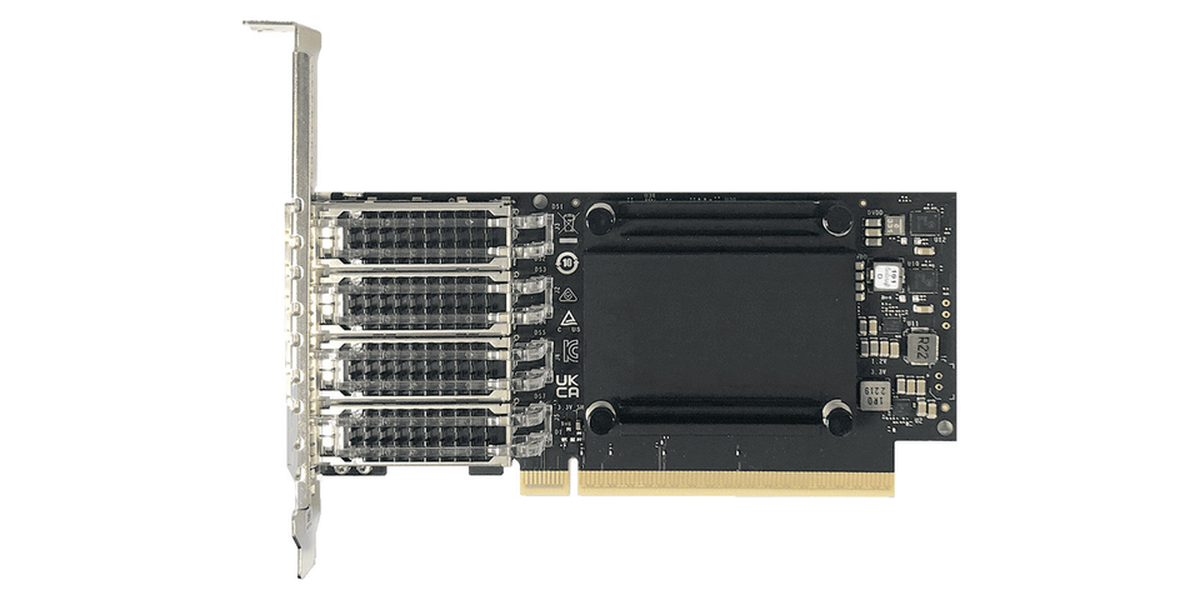
As AI infrastructure continues to evolve, discussions about networking often focus on high-speed interconnects such as 100G, 400G, and 800G. These technologies are essential for GPU-to-GPU communication during large-scale model training. However, another part of the network is equally important but receives far less attention: the connection between GPU servers and storage systems.
Regardless of how powerful GPUs become, training performance ultimately depends on how quickly data can be delivered to them. If storage systems cannot supply data fast enough, expensive compute resources remain underutilized. In many enterprise AI environments, 25G SR optical modules play a key role in bridging this gap.
Storage Performance Matters in AI Training
Modern AI workloads process enormous datasets consisting of images, videos, text, sensor information, and training checkpoints. Before GPUs can begin calculations, this data must be retrieved from the storage infrastructure.
In many AI clusters, storage traffic represents a significant portion of overall network activity. During training, multiple GPU servers may simultaneously access the same storage pool, generating continuous east-west traffic between compute and storage resources.
As model sizes continue to grow, storage throughput becomes increasingly critical. Even a small bottleneck in data delivery can reduce overall training efficiency and extend job completion times.
Why 25G SR Remains a Practical Choice
While high-performance AI fabrics often rely on 100G or faster links, not every connection within the infrastructure requires that level of bandwidth. Many storage access networks are designed around 25G Ethernet because it provides a balanced combination of performance, cost, and deployment flexibility.
For server-to-storage connectivity inside a data center, 25G SR modules offer several advantages:
Sufficient bandwidth for many AI data pipelines
Lower cost compared to higher-speed optics
Compatibility with existing multimode fiber infrastructure
Reduced power consumption
Broad support across servers, switches, and storage platforms
For organizations building small or medium-sized AI clusters, 25G often delivers enough throughput without introducing unnecessary complexity.
Supporting NAS and SAN Environments
Network Attached Storage (NAS) and Storage Area Networks (SAN) remain widely used in enterprise AI deployments. These systems provide centralized repositories for training datasets and model outputs.
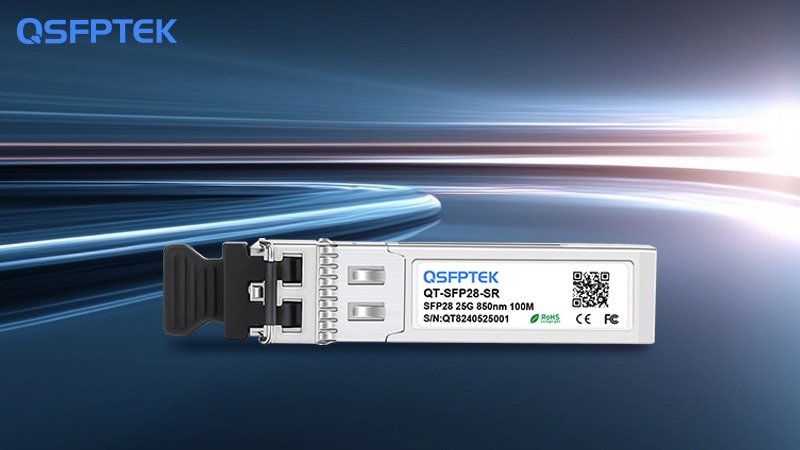
25G SR modules are commonly deployed to connect storage controllers, access switches, and GPU servers within the same facility. Because SR optics operate over multimode fiber, they are particularly well suited for short-reach links inside data halls and equipment rooms.
Compared to legacy 10G connections, upgrading to 25G significantly increases available bandwidth while allowing many organizations to continue using existing cabling infrastructure. This makes the transition both technically and financially attractive.
Preventing Storage Bottlenecks
One of the most common challenges in AI environments is keeping storage performance aligned with compute performance. GPU technology advances rapidly, but storage networks often lag behind.
For example, a cluster equipped with modern accelerators may process data faster than a 10G storage network can deliver it. As a result, GPUs spend time waiting for data rather than performing computations.
Moving to 25G connectivity helps reduce this risk by increasing throughput between storage and compute layers. It also provides additional headroom for future workload growth without requiring a complete network redesign.
While 25G may not eliminate every storage bottleneck, it often represents a practical and cost-effective step toward improving overall cluster efficiency.
Looking Beyond Raw Bandwidth
When evaluating AI infrastructure, it is easy to focus exclusively on GPU interconnect speeds. However, successful AI deployments depend on the performance of the entire data pipeline.
A balanced architecture ensures that compute, networking, and storage resources evolve together. In many environments, 25G SR modules contribute to this balance by providing reliable, economical connectivity between GPU servers and storage systems.
Conclusion
As AI workloads continue to expand, efficient data movement becomes just as important as raw computing power. Although higher-speed optics dominate headlines, 25G SR modules remain highly relevant in GPU-to-storage networks. By supporting NAS and SAN environments, reducing storage bottlenecks, and delivering cost-effective bandwidth, they help ensure that valuable GPU resources remain productive rather than waiting for data.
