
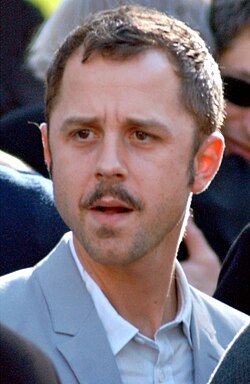
Antonino Giovanni Ribisi has spent most of his life in front of cameras, yet acting tells only part of his story. Known professionally as Giovanni Ribisi, he has played a nervous stockbroker, an army medic, a socially awkward brother, a corporate administrator on an alien moon and a conman living under another person’s name. His characters often appear unsettled, unpredictable or slightly removed from everyone around them. Even when he has only a few scenes, audiences tend to remember him.
Ribisi’s career also contains a second story that developed away from public attention. While viewers recognised him from Friends, Saving Private Ryan, Boiler Room, Ted and Avatar, he studied lenses, lighting, film stocks and visual effects. He became involved in stereoscopic conversion, collected camera equipment, directed music videos and spent years working towards a career as a cinematographer.
That combination makes Ribisi difficult to classify. He has worked steadily since childhood without becoming a conventional Hollywood star. He rarely promotes his private life, does not build his public identity around social media and often chooses supporting characters over obvious heroic roles. His route through the film industry has been less about celebrity status and more about curiosity, craft and the freedom to move between jobs.
The Child Who Preferred the Camera Crew
Antonino Giovanni Ribisi was born in Los Angeles on 17 December 1974. His family already had close ties to entertainment. His father, Albert “Al” Ribisi, worked as a musician, while his mother, Gay Ribisi, managed actors and writers and had an interest in photography. Giovanni grew up with his twin sister, Marissa, who also became an actor, and another sister, Gina, who worked in voice acting.
Ribisi entered television while still at primary-school age. His early credits included Highway to Heaven, Simon & Simon and The Twilight Zone. Some of those appearances credited him as Vonni Ribisi, a shortened version of Giovanni. By 1987, he had secured a recurring role as Cory Kupkus in the sitcom My Two Dads, appearing in dozens of episodes over three seasons.
Child acting gave Ribisi an education far removed from an ordinary classroom. He studied in temporary schoolrooms inside studios and spent long days surrounded by adult technicians. Rather than treating the crew as background staff, he watched how they worked. Camera operators, grips and lighting technicians interested him as much as the actors performing the scenes.
Ribisi later said that crew members felt like his real schoolmates. He wanted to understand where a camera would be placed, why a cinematographer chose a particular lens and how lighting altered a face. That attention continued throughout his acting career. When a director of photography entered a room, Ribisi often wanted to ask questions about equipment and technique.
Early employment did not protect him from rejection. Ribisi has recalled auditioning for a sitcom at around 15 and believing that he badly needed the job. Another actor won the part. The loss followed many previous refusals and forced him to consider the possibility that acting might not provide a permanent livelihood. His childhood success had not removed the uncertainty faced by every working performer.
Television nevertheless kept him busy. Ribisi appeared in Blossom, Davis Rules and The Wonder Years, where he played Jeff Billings, a friend of Kevin Arnold. Jeff was more subdued than many of Ribisi’s later characters, but the role demonstrated his ability to communicate unease without turning every emotion into dialogue.
Ribisi’s development differed from that of child stars built around a single programme. He moved between guest roles, recurring characters and television films rather than becoming attached to one famous identity. That pattern helped him enter adult acting without having to escape a beloved childhood persona. It also taught him how to arrive on an unfamiliar set, understand its rhythm and contribute quickly.
His family provided another unusual connection to the industry. Marissa Ribisi appeared in films including Dazed and Confused and later made a guest appearance in Friends. Giovanni and Marissa were therefore real-life twins who both entered acting and separately appeared in one of the biggest television comedies of the 1990s.
Giovanni’s own relationship with Friends began before Frank Buffay Jr. appeared. He first made a brief appearance as a stranger who accidentally dropped a condom into Phoebe’s guitar case. The programme later cast him as Phoebe’s younger half-brother, without explaining whether the two characters had any connection. The earlier appearance became a small curiosity for viewers who noticed the repeated casting.
Frank Jr. could have been a broad sitcom caricature. Ribisi instead gave him a peculiar but consistent personality. Frank spoke too loudly, reacted with delayed excitement and seemed unaware of ordinary social boundaries. His behaviour made Phoebe appear almost conventional by comparison, yet Ribisi avoided presenting him as cruel or foolish. Frank’s affection for his much older teacher, Alice, felt bizarre, sincere and strangely touching at the same time.
Ribisi remembers surprisingly little about making those episodes. He was often working elsewhere and did not follow the full rehearsal schedule used by the regular cast. He would arrive close to filming, receive the script, memorise his dialogue quickly and perform before the studio audience. Fans now quote Frank’s lines to him, only to discover that he sometimes cannot recall the scene.
That limited memory reflects the pace of his career rather than a lack of interest. Ribisi was moving between comedy, independent cinema and large studio productions, sometimes within the same day. Friends became a defining credit for audiences, but it was one assignment among several competing for his attention.
The Supporting Actor Who Steals the Memory
Ribisi’s adult breakthrough did not arrive through a conventional leading role. He gained wider attention in That Thing You Do!, Tom Hanks’s 1996 film about a short-lived pop group. Ribisi played Chad, the original drummer who broke his arm before an important performance. The accident allowed Guy Patterson to join the band and change its sound, making Chad a minor character whose bad luck set the entire story in motion.
David Lynch’s Lost Highway offered a sharp contrast the following year. Ribisi appeared as Steve “V”, part of the strange criminal world surrounding the film’s fractured narrative. The performance formed one piece of a deliberately disorientating production and placed him inside a type of cinema far removed from network sitcoms.
Ribisi reached a much larger audience as Technician Fourth Grade Irwin Wade in Steven Spielberg’s Saving Private Ryan. Wade serves as the medic in Captain Miller’s squad, treating wounded soldiers while knowing that his own medical knowledge may not save him. Ribisi gave the character a tired gentleness that stood apart from the aggression surrounding him.
The cast underwent two weeks of military training under retired Marine Dale Dye before filming. They camped in the English countryside, carried heavy equipment and followed military discipline in poor weather. The training gave the actors shared exhaustion and resentment, emotions that could be used when the cameras started.
Wade’s death remains one of the film’s most painful scenes. After being shot, he diagnoses his own injuries and asks for morphine while the other soldiers struggle to help him. Ribisi plays the moment without a grand speech. Wade calls for his mother as his awareness fades, reducing the vast military operation to one frightened young man dying far from home.
A quieter church scene revealed another side of the character. Wade tells the squad how he once pretended to be asleep when his mother returned from work because he did not feel like speaking to her. He now regrets wasting those chances to talk. The story prepares the audience for his final words without announcing what will happen later.
Ribisi’s schedule during that period showed how quickly he moved between emotional registers. He recalled filming the church sequence early in the morning, leaving the production in the afternoon to work on Friends and then reporting for a night shoot on another film. In the space of one day, he shifted from wartime grief to a brightly lit comedy performed before a live audience, then moved to another character after dark. He described that unusual working day in a 2024 career interview.
Ribisi followed Saving Private Ryan with roles that resisted repetition. In The Other Sister, he played Daniel, a young man with an intellectual disability who wants independence and a relationship of his own. The film’s approach belongs to a different era, but Ribisi treated Daniel’s romantic hopes seriously rather than using the character solely for sentiment or comedy.
Boiler Room gave Ribisi one of his strongest leading roles. He played Seth Davis, a young man running an illegal casino before joining a brokerage firm that sells worthless shares through aggressive telephone pitches. Seth begins as an ambitious outsider attracted to money and status. He gradually recognises that his success depends on deceiving people who cannot afford the losses.
Ribisi made Seth watchful rather than openly charismatic. The character studies the senior brokers, copies their language and suppresses his doubts because he wants his father’s approval. His unease grows through small pauses and changes in tone. Ribisi never needs a sudden transformation to show Seth’s conscience returning.
The Gift placed him opposite Cate Blanchett as Buddy Cole, a disturbed mechanic accused of murder. Buddy’s history of abuse and mental illness made the role difficult to control. Ribisi moved between fear, anger and childlike dependence, earning a Saturn Award nomination for supporting actor.
Heaven, directed by Tom Tykwer from a screenplay associated with Krzysztof Kieślowski, required a different form of preparation. Ribisi played Filippo, a young Italian Carabinieri officer who helps an English teacher escape after a bombing kills innocent people. The role demanded long passages in Italian, delivered with the correct regional sound and institutional vocabulary.
Ribisi reportedly spent seven or eight days largely isolated in a hotel room while learning the dialogue. He recorded his lines, repeated them and worked on the accent until he could concentrate on the scene rather than the mechanics of pronunciation. The effort suited a film built around restraint, moral confusion and a growing bond between two people who speak different first languages.
Comedy allowed Ribisi to make equally strong choices with less preparation. In Ted, he played Donny, an obsessive fan who wants to obtain the talking bear for his son. Donny could appear threatening, but Ribisi added an unexpected private dance to Tiffany’s “I Think We’re Alone Now”. He suggested the basic idea to director Seth MacFarlane, filmed it quickly and watched it become one of the character’s best-known moments.
Ribisi’s comedy works because he does not signal that a character knows he is funny. Frank Jr., Donny and Ralph in My Name Is Earl pursue their desires with complete seriousness. Their intensity creates the humour. Ribisi received an Emmy nomination for playing Ralph, a criminal whose loyalty to Earl frequently collides with his attraction to theft and violence.
Sneaky Pete finally placed Ribisi at the centre of a long-running television drama. He played Marius Josipović, a conman who leaves prison and assumes the identity of his former cellmate, Pete Murphy. Marius joins Pete’s estranged family while hiding from a gangster, creating a role based on constant observation and adjustment.
The series used skills Ribisi had developed across decades. Marius must understand what other people expect from Pete, then provide enough detail to maintain the deception. Ribisi changes his posture, rhythm and emotional openness according to the person in front of him. The performance works through calculation rather than disguises.
Ribisi initially hesitated to accept an hour-long television lead because of the workload. Shooting could last 14 to 16 hours, followed by evenings spent learning the next day’s pages. The concern was practical, not dismissive. He understood that carrying a series meant giving most of his week to one character, often for several months.
His career has therefore depended less on the size of a role than its internal tension. Ribisi tends to choose men who want acceptance while hiding something uncomfortable. Seth wants his father’s respect but sells fraudulent shares. Marius wants safety but lies to the people sheltering him. Parker Selfridge in Avatar presents corporate decisions as reasonable while supporting the destruction of another society.
Physical detail gives those characters their final shape. Ribisi might tighten his jaw, lift his voice at the wrong moment or hold eye contact slightly too long. He can use the same alert expression for fear, dishonesty or social discomfort. Directors can place him in military churches, futuristic control rooms, family kitchens or restaurant booths, and he still creates the sense that his character is monitoring everyone nearby.
The Technical Career Hidden Behind the Famous Face
Ribisi’s interest in filmmaking technology eventually became a business pursuit. He became a partner in Stereo D, a company specialising in the conversion of two-dimensional footage into stereoscopic 3D. The company worked on part of the conversion process for the original Avatar, creating the unusual situation in which Ribisi contributed both as an actor and through post-production technology.
James Cameron cast Ribisi as Parker Selfridge, the corporate administrator overseeing the human mining operation on Pandora. Parker is not a soldier, but his decisions help drive the conflict. He treats the destruction of the Na’vi home as a business obstacle, delivering brutal orders in the language of schedules, shareholders and financial necessity.
Ribisi’s involvement with Stereo D gave him a separate connection to the film’s technical ambitions. He has spoken about working through extreme deadlines, including periods when he stayed awake for as long as three days. His company’s contribution had to meet the standards of a production that was already pushing digital performance capture, 3D exhibition and computer-generated environments.
Selling the visual-effects business left Ribisi at a personal crossroads. He had already spent decades acting, but he questioned what he wanted to pursue next. The answer came from the same technical curiosity he had developed as a child. He bought cameras, learned their systems and began filming material himself.
Ribisi built his knowledge gradually rather than announcing an immediate career change. He shot friends, commercials, short productions and music videos. He acquired more equipment and created a small studio. Over time, what began as private study became professional work.
Music offered one public sign of that transition. Ribisi directed the video for The Kills’ “Siberian Nights”, released in 2016. The black-and-white video combines dancers, dogs, children and religious imagery in a stark desert setting. Its controlled movement and high-contrast photography showed that he was thinking beyond an actor’s position inside the frame.
Cinematography remained his central interest. Ribisi studied film stocks, exposure, colour, lenses and the practical demands of lighting locations. He also learned how technical decisions affect performers. A large camera placed close to an actor creates a different atmosphere from a small camera positioned at a distance, even if both capture a similar composition.
Strange Darling gave Ribisi his first feature-length credit as a cinematographer. Writer-director J.T. Mollner had known him for years, and the two had discussed working together. When Ribisi read the script, he called Mollner within minutes and asked to join the production.
Mollner did not immediately assume that a successful actor could photograph a feature. Cinematography demands technical planning, leadership of several departments and fast decisions under financial pressure. Ribisi showed him a reel containing the work he had completed quietly over the previous years. The material persuaded Mollner to take the request seriously.
The pair chose to shoot Strange Darling on 35mm film. The decision gave the thriller rich colour, visible texture and strong contrast. Ribisi used red throughout costumes, interiors and objects, while an extended conversation inside a truck unfolds under deep blue light. The colours do not merely decorate the scenes; they alter how viewers read attraction, danger and control.
One long shot presented a severe practical test. Ribisi had to light seven rooms in around two hours while leaving enough space for a moving camera and the actors. He could not allow stands and cables to appear as the camera travelled through the house. He eventually used roughly 20 to 30 lights, pushing some through curtains and hiding others beyond the frame. The finished sequence looks less heavily lit than the work required to create it.
Ribisi’s acting background shaped his treatment of faces. He remembered meeting cinematographer Janusz Kamiński before the cast of Saving Private Ryan left for military training. Kamiński sat nearby and quietly studied the actors’ faces. At the time, Ribisi did not fully understand why. Years later, he recognised the importance of learning how each face responds to light and how photography can serve a performance.
His approach begins with the character rather than a desire to create a beautiful standalone image. Sometimes the camera should contribute movement, colour or pressure. At other times, it should remain still and allow the actor to control the scene. Ribisi’s years in front of lenses help him recognise when technical ambition might interrupt an honest performance.
The move into cinematography did not mean abandoning acting. Ribisi continued appearing in major productions, including Kevin Costner’s Horizon: An American Saga, while working behind the camera. The two careers now run beside each other, giving him access to different parts of the same process.
The Private Person Behind the Performances
Ribisi has kept much of his personal life separate from his work. He married actress Mariah O’Brien in 1997, and they had a daughter, Lucia, before divorcing in 2001. He later had a long relationship with musician Chan Marshall, better known as Cat Power, and married English model Agyness Deyn in 2012. That marriage ended several years later.
Family life gained an unusual symmetry in 2018 when Ribisi and his partner, Emily Ward, welcomed fraternal twins. Ribisi therefore grew up as a twin and later became the father of twins. He has three children, but he rarely uses parenthood as part of his public image.
Ribisi has spoken more openly about Scientology than many aspects of his private life. He was raised in the religion and has publicly identified as a Scientologist. The subject has generated criticism and debate, particularly when interviewers have asked him about former members and allegations involving the organisation.
A fair account should distinguish documented statements from assumptions about his private conduct. Ribisi’s religious affiliation forms part of his biography, but it does not explain every professional decision or performance. Treating it either as an irrelevant detail or as the sole key to his identity would produce an incomplete portrait.
Work remains the area where Ribisi reveals the most about himself. His interviews become especially detailed when the discussion turns to film, lighting or preparation. He can explain the pressure of learning Italian, the discipline of military training or the mathematics of exposure more readily than he discusses fame.
That preference may explain the shape of his career. Ribisi has never depended on audiences seeing him as a stable personality. He disappears into men who are anxious, foolish, dangerous, wounded or dishonest. At the same time, he studies the machinery recording those performances.
Antonino Giovanni Ribisi started as a child standing beside a camera crew and wondering how images were made. Four decades later, he photographed a feature on 35mm while continuing to act in some of cinema’s largest franchises. The famous face was only one part of the job. He had been preparing for the other side of the camera all along.
