
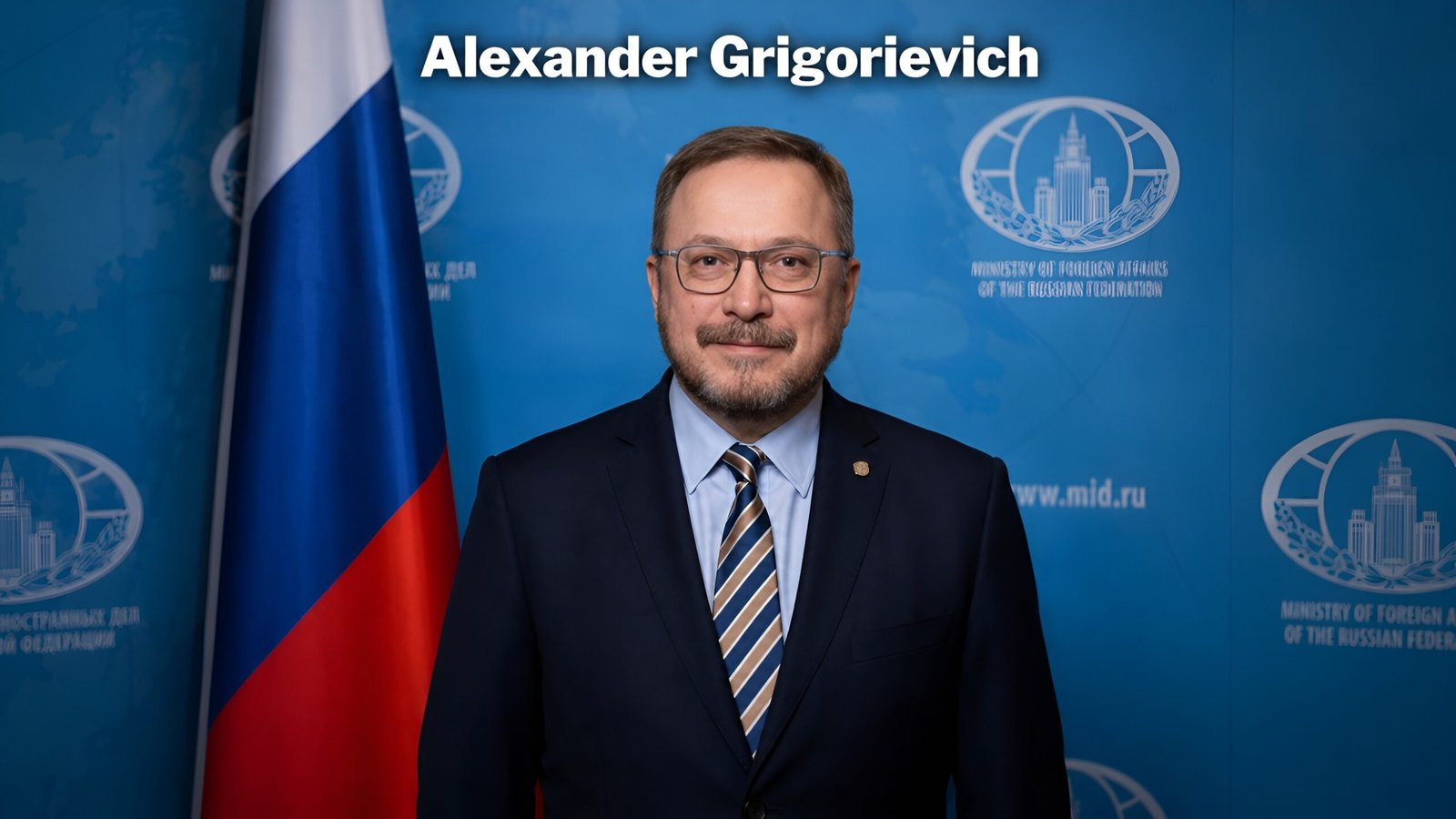
Alexander Grigorievich Lukashenko is the President of Belarus, in power since 1994, making him the longest-ruling leader in Europe. Born on August 30, 1954, in Kopys, Belarus, he rose from a farm director to a political force who has shaped his nation for over three decades. He is widely known internationally as “Europe’s last dictator” and remains a close ally of Russian President Vladimir Putin.
Quick Bio Table
| Detail | Information |
| Full Name | Alexander Grigorievich Lukashenko |
| Date of Birth | August 30, 1954 |
| Place of Birth | Kopys, Orsha District, Vitebsk Oblast, Belarus |
| Nationality | Belarusian |
| Profession | Politician, President of Belarus |
| In Power Since | July 10, 1994 |
| Education | Mogilev State Pedagogical University; Belarusian Agricultural Academy |
| Known For | Longest-ruling president in Europe |
| Political Position | Pro-Russia, authoritarian nationalist |
| Current Status | President (7th term, sworn in March 2025) |
Who Is Alexander Grigorievich Lukashenko?
When you search the name “Alexander Grigorievich,” you are most likely looking for one of the most powerful and controversial political figures in the post-Soviet world. Alexander Grigorievich Lukashenko is the President of the Republic of Belarus, a country that borders Russia, Ukraine, Poland, and the Baltic states. He first came to power in 1994 and has maintained his grip on the nation ever since, weathering protests, international sanctions, and global criticism to remain at the top of Belarusian politics for more than thirty years.
His story is not simply a political biography. It is the story of how a man born in a small rural town, raised by a single mother, and trained as a history teacher managed to transform himself into one of the most durable and internationally scrutinized leaders in the world. Understanding who Lukashenko is means understanding Belarus itself — a country caught between East and West, between Soviet nostalgia and the desire for democratic change.
Early Life and Humble Origins That Shaped a President
Alexander Grigorievich Lukashenko was born on August 30, 1954, in the small town of Kopys, located in the Orsha District of Vitebsk Oblast in what was then the Soviet Union. He grew up in the village of Alexandria in Mogilev Oblast, raised by his mother Yekaterina, who worked as a milkmaid on a collective farm. His father was absent from his life, and from a very young age, he learned the values of hard work, self-reliance, and discipline.
His upbringing in the Soviet countryside gave him practical instincts and a populist worldview that would later define his political persona. He helped his mother with farm chores, studied at a local rural school, and developed a personality that his teachers and classmates recognized as naturally commanding and assertive. These formative years in poverty and rural simplicity became central to his political identity later in life, as he frequently presented himself as a man of ordinary people against corrupt elites.
Education and Military Service That Built His Foundation
After finishing secondary school, Lukashenko chose to study history, a discipline that would give him insight into political power and national identity. In 1975, he graduated from Kuleshov Mogilev State Pedagogical University with a degree in history. His academic training was followed immediately by military service, where he served from 1975 to 1977 as a political instructor in the border troops of the Soviet Army’s Western Border District.
He later went on to earn a second degree, this time in economics, from the Belarusian Agricultural Academy, while already working in management roles. This combination of history, economics, and military experience gave him a well-rounded foundation that he later channeled into political ambition. He frequently cited his time in the army as one of the most important periods of his life, saying it taught him discipline, leadership, and the importance of national security — themes that would run throughout his presidency.
Career as a Farm Director Before Entering Politics
Before entering the world of formal politics, Lukashenko spent years working in management roles in the agricultural and manufacturing sectors of Soviet Belarus. He managed state farms and collective agricultural enterprises in the Shklov district of Mogilev Oblast. During this period, he also participated in Komsomol and Communist Party activities, which were the standard pathways to social mobility in the Soviet system.
His work as a farm director gave him direct contact with ordinary workers and rural communities. He developed a reputation as a straightforward, no-nonsense manager who was not afraid to confront inefficiency or corruption in his organizations. This period built his grassroots credibility and his understanding of economic realities on the ground, which later became one of his strongest political selling points when he entered the Belarusian parliament in 1990.
Entry into Politics and Rise to Parliament in 1990
The political career of Alexander Grigorievich Lukashenko began in earnest in 1990, when he was elected to the Supreme Council of Belarus. His arrival in parliament coincided with the collapse of the Soviet Union, a period of enormous uncertainty, economic hardship, and political transformation across the former communist bloc. He immediately stood out as a vocal and uncompromising member who was willing to challenge the establishment.
He founded a faction called “Communists for Democracy” and positioned himself as an anti-corruption crusader at a time when corruption was rampant in the newly independent states. In the early 1990s, he chaired a parliamentary commission specifically tasked with investigating corruption, a role that gave him tremendous public visibility and a reputation as someone willing to name names and hold powerful people accountable. This image proved enormously popular with ordinary Belarusians who were frustrated with post-Soviet chaos.
Historic 1994 Presidential Election and First Victory
The year 1994 marked a turning point not only in Lukashenko’s life but in the history of Belarus. The country held its first-ever direct presidential election, and Lukashenko entered as a relatively unknown political outsider with no major party backing. Running on a simple but powerful platform of anti-corruption and closer relations with Russia, he appealed directly to voters who were exhausted by economic collapse and political dysfunction.
In the second round of voting, he defeated incumbent Prime Minister Vyacheslav Kebich with a stunning 80.3% of the vote, becoming the first and, so far, only elected president in Belarusian history. The victory was widely seen as a genuine democratic outcome at the time, reflecting the real frustration of the population. He was sworn in as President of Belarus on July 20, 1994, beginning what would become one of the longest uninterrupted presidential rules in modern European history.
Consolidation of Power and Constitutional Changes After 1994
Once in office, Lukashenko moved quickly and decisively to consolidate his authority. In 1995, just months into his presidency, he organized a referendum that replaced Belarus’s national symbols — the flag and coat of arms — with ones that closely resembled Soviet-era designs and elevated Russian to the status of an official state language alongside Belarusian. These moves signaled clearly that his government would look backward to the Soviet model rather than forward toward Western liberal democracy.
The most significant power grab came in November 1996, when he persuaded voters to approve a new constitution that dramatically expanded presidential authority. The revised constitution gave him the power to rule by decree, appoint one-third of the upper house of parliament, dissolve the parliament under certain conditions, and extend his own term in office. International observers and opposition politicians condemned these changes as anti-democratic, but they set the stage for his decades-long hold on power.
Relationship With Russia and the Union State Agreement
One of the most defining features of Lukashenko’s presidency has been his close and often strategic relationship with Russia. Shortly after coming to power, he promoted deeper integration with Moscow and signed a series of agreements with Russian President Boris Yeltsin aimed at various forms of political and economic union. In 1999, the two countries signed the Treaty on the Creation of a Union State, which proposed broad cooperation while preserving the formal independence of both nations.
This Russia-Belarus alliance has been both a source of political support and economic lifeline for Lukashenko. Russia provides Belarus with subsidized oil and gas, which has allowed Lukashenko to maintain Soviet-style subsidized prices for ordinary Belarusians without fully transitioning to a market economy. In return, Lukashenko has aligned Belarus closely with Russian foreign policy, and since Russia’s invasion of Ukraine in 2022, Belarus has served as a launchboard territory for Russian military operations, deepening the two countries’ strategic entanglement.
International Isolation, Sanctions, and the “Last Dictator” Label
As his rule extended decade after decade, Lukashenko drew increasing condemnation from Western governments and human rights organizations. His suppression of political opposition, silencing of independent media, and treatment of protesters earned him the now-famous label of “Europe’s last dictator.” The European Union has repeatedly imposed travel bans and economic sanctions on him and his officials, citing violations of democratic norms and human rights.
The 2006 presidential election triggered particular international outrage. Many countries and organizations condemned the results as fraudulent, and the EU subsequently barred Lukashenko and a number of his officials from entering EU member countries. Although temporary rapprochements occurred, such as when the EU briefly lifted travel restrictions in 2008, the overall trajectory of his relationship with the West has been one of deepening hostility and mutual suspicion that continues to this day.
The 2020 Election Crisis and Massive Protests
The most serious domestic challenge of Lukashenko’s career came in August 2020, when presidential elections produced preliminary results showing him winning in a landslide. Observers, opposition groups, and independent journalists reported widespread ballot stuffing, falsification of results, and voter intimidation on a massive scale. The opposition candidate, Sviatlana Tsikhanouskaya, was widely believed by many Belarusians to have actually won the election.
What followed was the largest protest movement in Belarusian history. Hundreds of thousands of citizens took to the streets across the country, demanding Lukashenko’s resignation and calling for new free elections. The government responded with a violent crackdown, arresting thousands of protesters, detaining opposition figures, and using security forces to suppress demonstrations. Tsikhanouskaya fled the country and established a government-in-exile, which gained recognition from several Western nations as the legitimate representative of democratic Belarus.
Brokering the Wagner Group Crisis in 2023
In June 2023, Lukashenko played an unexpected diplomatic role that drew global attention. When Yevgeny Prigozhin, leader of the Wagner private military group, launched a short-lived armed mutiny against the Russian military command and marched his forces toward Moscow, it was Lukashenko who stepped forward to broker a deal. He negotiated an agreement that halted the Wagner advance and offered Prigozhin exile in Belarus, effectively defusing what appeared to be an existential threat to Vladimir Putin’s government.
The episode was widely interpreted as Lukashenko demonstrating his value to Putin and reinforcing his role as a key partner in the Russia-Belarus alliance. It also underscored his diplomatic instincts and his ability to operate in high-stakes geopolitical situations. Whether the intervention was entirely his own initiative or coordinated with the Kremlin remains debated by analysts, but it temporarily elevated his international profile beyond that of a simple satellite leader.
Seventh Presidential Term and the 2025 Election
In January 2025, Belarus held another presidential election, and Lukashenko once again claimed victory, this time with a reported 87.6% of the vote according to state television. International observers and opposition groups denounced the election as a farce, noting that only pre-approved challengers were permitted to run and that independent monitoring was effectively blocked. The European Union signaled further sanctions in response to the election outcome.
On March 25, 2025, Alexander Grigorievich Lukashenko was sworn in for his seventh term as President of Belarus, marking more than thirty years in continuous power. His political opponents described the ceremony as illegitimate, while Belarusian state media celebrated it as a democratic mandate. The seventh term began with Lukashenko offering to host Ukraine-Russia peace talks in Minsk, a move that most Western governments viewed with deep skepticism given Belarus’s role in supporting Russia’s war in Ukraine.
Who Is Alexander Grigoriev — The Soviet-Era Artist With the Same Name
While this article has primarily focused on the politician, it is worth noting that “Alexander Grigorievich” as a naming structure has produced other historically significant figures. One of the most notable is Alexander Vladimirovich Grigoriev, a Mari Soviet artist and academician who lived from 1891 to 1961. Born in the village of Petnury in Kazan Governorate of the Russian Empire, he became one of the first artists from the Mari people to receive a formal visual arts education.
He studied at both the Kazan Art School and the Moscow School of Painting, Sculpture and Architecture, becoming a member of the USSR Union of Artists and working as an art editor for the State Publishing House. His paintings are held in museums including the Tretyakov Gallery in Moscow. Although entirely different in era and field from the Belarusian president, Alexander Grigoriev the artist represents the broader cultural richness of figures who have carried the Grigorievich patronymic name across Russian and Soviet history. Both figures share the same patronymic lineage structure while representing completely different dimensions of human achievement.
Legacy, Human Rights Criticisms, and Global Impact
The legacy of Alexander Grigorievich Lukashenko is deeply contested. Supporters within Belarus credit him with maintaining economic stability, low unemployment, and social safety nets in a region that saw neighboring countries experience painful market transitions after the Soviet collapse. His government preserved significant state control over key industries and maintained Soviet-era social services that many older Belarusians associate with security and predictability.
Critics, however, point to a fundamentally different record. Independent journalists have been jailed, opposition politicians imprisoned, and civil society organizations dismantled. The 2020 protests revealed the depth of public discontent, and thousands of Belarusians have fled the country since then. Human rights organizations including Amnesty International and Human Rights Watch have documented systematic torture of detained protesters, forced disappearances, and the weaponization of the legal system against political opponents. His international legacy is overwhelmingly defined by authoritarianism and the suppression of democratic freedoms.
Conclusion
Alexander Grigorievich Lukashenko remains one of the most durable and divisive political leaders of the modern era. Rising from rural poverty and a career managing Soviet collective farms, he built a political identity rooted in anti-corruption rhetoric, Soviet nostalgia, and Belarusian nationalism. Now in his seventh presidential term, he continues to govern a country that sits at the heart of Europe’s most consequential geopolitical tensions. Whether history ultimately judges him as a stabilizing force or a repressive autocrat will depend heavily on who writes that history — and whether Belarus ever achieves the democratic transformation its opposition has long demanded. His story, inseparable from the story of Belarus itself, is far from over.
Frequently Asked Questions (FAQs)
Q1. Who is Alexander Grigorievich Lukashenko?
He is the President of Belarus, in power since 1994, and the longest-serving leader in Europe. He is known for his authoritarian style and close alliance with Russia.
Q2. Why is Lukashenko called “Europe’s last dictator”?
Western governments and media gave him this label due to his suppression of political opposition, rigged elections, and crackdown on free speech and civil liberties across more than three decades in power.
Q3. How many times has Lukashenko been re-elected?
As of 2025, he has been elected or re-elected seven times, though most of these elections after his initial 1994 victory have been widely condemned as neither free nor fair by international observers.
Q4. What is the relationship between Belarus and Russia under Lukashenko?
Belarus and Russia have a deep strategic and economic partnership under Lukashenko. Russia provides subsidized energy and political support, and Belarus has allowed Russian military use of its territory, particularly during the 2022 Ukraine invasion.
Q5. What happened during the 2020 Belarus protests?
Following a disputed presidential election, hundreds of thousands of Belarusians protested demanding Lukashenko’s resignation. The government responded with mass arrests, violence, and a major crackdown on civil society and independent media.
Q6. Who is Alexander Grigoriev the artist?
Alexander Vladimirovich Grigoriev (1891–1961) was a Mari Soviet painter and academician, one of the first artists from the Mari people to receive formal art training. His works are held in the Tretyakov Gallery in Moscow.
Q7. Is Lukashenko still in power in 2025?
Yes. He was sworn in for his seventh presidential term on March 25, 2025, after an election in January 2025 that opposition groups and Western governments denounced as illegitimate.
Fore more info: Usasparktime.co.uk
